

Uncertainty is easing, the energy shock is fading, and the next upward momentum is beginning to build beneath the surface of the markets.
Markets do not move when crises end. They move when they begin to understand them. And at this stage, the environment that is forming suggests that we are precisely in this transitional phase, where uncertainty remains, but gradually ceases to dictate capital behavior.
In this context, attention shifts from the event itself to the market’s ability to absorb it. So far, the picture remains indicative of an environment where capital is not exiting risk but repositioning within it. The relative resilience of U.S. markets, combined with sustained liquidity, confirms that the current phase is not characterized by systemic deleveraging, but by selective reallocation of positions.
At the same time, the significant divergence in rhetoric between the United States, Iran, and Israel continues to create a high-noise environment. Daily shifts in statements influence short-term sentiment without materially altering the underlying fundamentals. Markets now appear to filter this flow of information with greater maturity, prioritizing actual developments over rhetoric.
Importance should also be placed on the extension strategy employed by Donald Trump, which has historically acted as a stabilizing mechanism for markets during periods of heightened uncertainty. In the past, similar actions related to tariff implementations provided the necessary time for risk absorption, leading to a normalization of sentiment and, subsequently, strong upward market reactions. The recent extension through April 6 appears to follow the same logic, reducing the likelihood of immediate escalation and allowing capital to reposition with greater visibility.
The distribution of monthly performance further confirms this transitional phase. Energy absorbed most capital flows, with heating oil rising over 70%, while Brent and WTI gained more than 50% and 45% respectively. At the same time, commodities broadly moved higher, while precious metals experienced sharp compression, with silver declining nearly 27% and platinum and palladium falling over 20%. Equity markets came under pressure, with major U.S. indices down approximately 6% and European markets declining even more significantly. This dynamic does not indicate a withdrawal from risk, but rather a reallocation of capital, with energy acting as a temporary recipient of flows.
This overall picture, combined with the rapid absorption of geopolitical risk, reinforces the view that markets are closer to the end of the adjustment phase than the beginning of a new downward cycle.
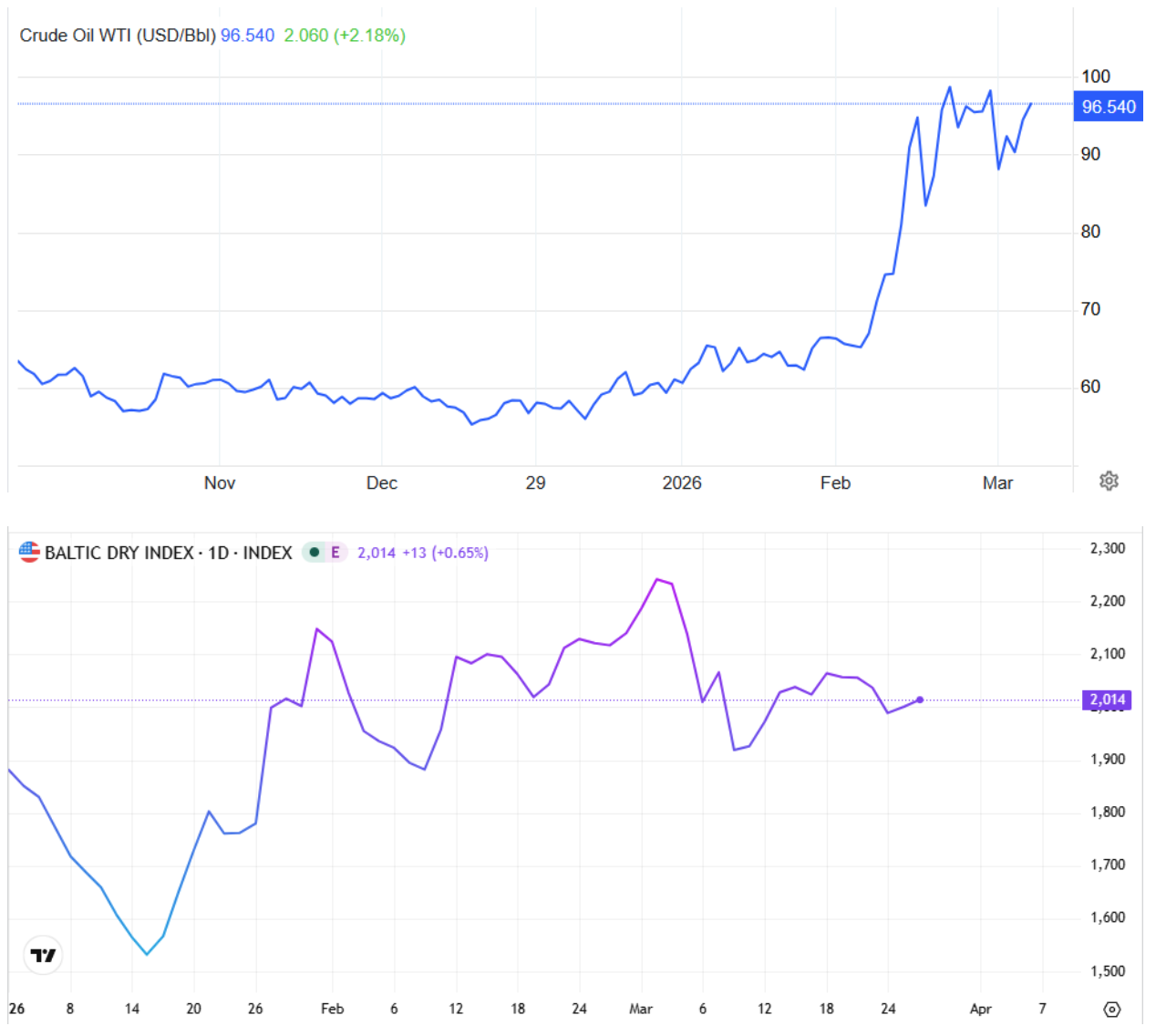
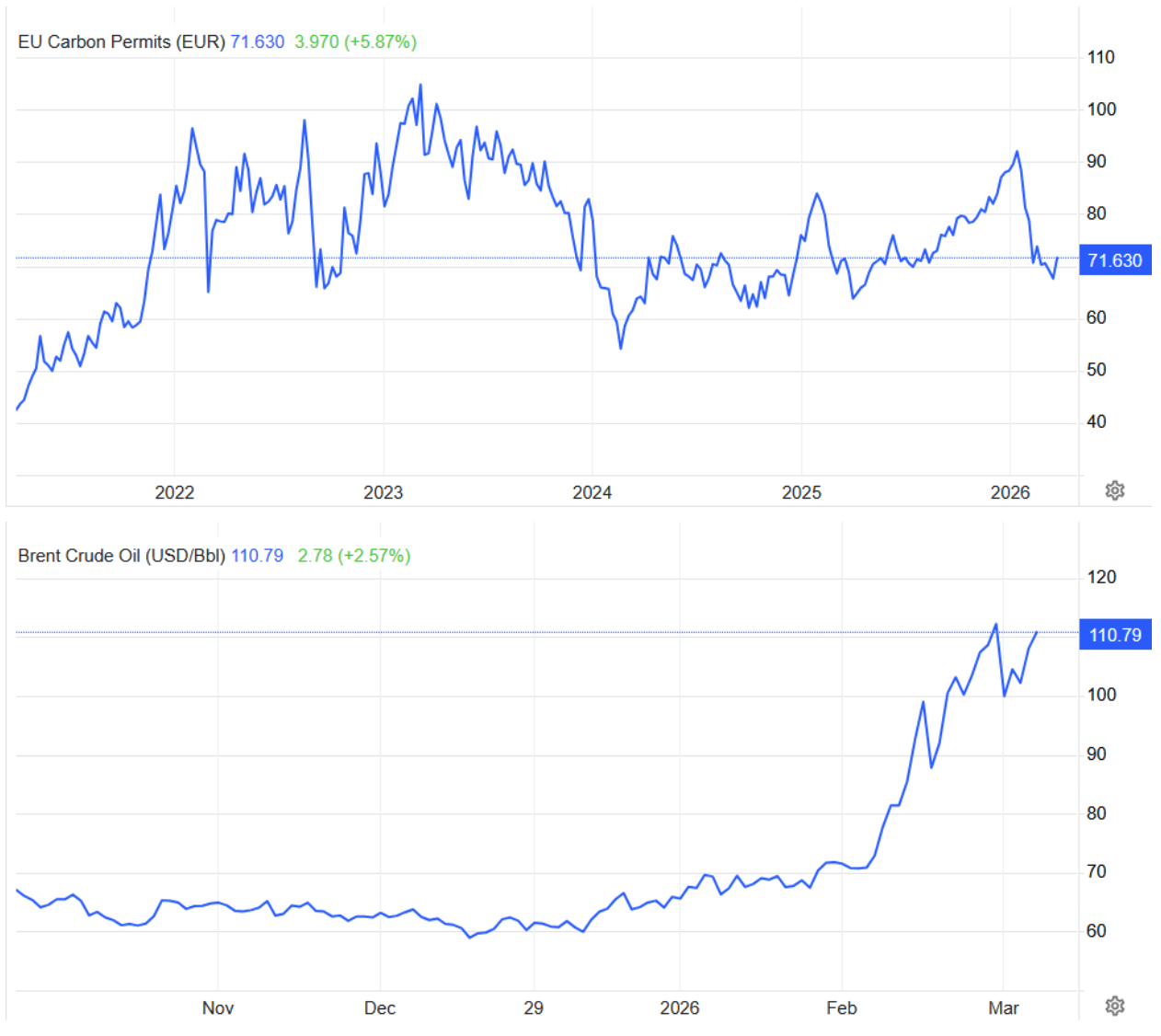
At the same time, it is particularly noteworthy that despite the constant shifts in rhetoric and ongoing tension, oil prices have failed to move to new highs beyond those seen on March 9. This suggests that markets have already priced in a significant portion of geopolitical risk. The only clear exception has been gasoil, which reached new highs on March 23, primarily driven by increased demand linked to shipping activity. However, even in this case, prices have already entered a phase of rapid normalization, currently trading approximately $100 lower than recent highs. This reinforces the view that energy rally had the characteristics of a short-term shock rather than a sustainable upward trend.
Interest should also be placed on current levels of EU carbon allowances (EUA), which, following their recent decline, can now be considered opportunistic. This drop is directly linked to reduced intensity in maritime transport activity during the crisis, as temporary slowdowns in flows and a wait-and-see approach from markets curtailed demand for emissions allowances. However, this decline does not reflect a structural shift in demand, but rather a short-term adjustment. In this context, current EUA levels create a lower operating cost environment for shipping, at a time when demand for transportation remains strong in the medium term. The combination of these two factors, lower costs and expected activity recovery, creates a particularly favorable setup for the sector, increasing the likelihood of a significant improvement in profitability in the next phase of the cycle.
Historical market behavior in similar geopolitical crises reveals a recurring pattern: initial reactions tend to be sharp but rarely sustained. In cases such as the Gulf War and the Iraq War, markets declined ahead of military engagement but stabilized and moved higher once uncertainty began to fade. The key takeaway is that markets tend to price in worst - case scenarios early, meaning that the actual unfolding of events, provided they do not evolve into a systemic shock, often acts as a turning point.
In this environment, where rhetoric remains unstable, but fundamentals show increasing resilience, markets are gradually shifting away from fear and back toward opportunity. The behavior of the technology sector supports this view, as it continues to demonstrate strength even amid elevated volatility, suggesting it may once again assume a leading role in the next phase.
The historical evolution of markets following similar geopolitical crises further reinforces this perspective. In the case of the Iraq War in 2003, global markets had already priced in most of the uncertainty prior to the onset of military operations. Following the start of the conflict and the clarification of the geopolitical landscape, major indices moved significantly higher over the subsequent six months, with the S&P 500 gaining more than 15% and European markets delivering double-digit returns. This pattern confirms that markets react most strongly to uncertainty before the event, while the event itself, if not systemic, often becomes the catalyst for the next upward phase.
In this context, investment opportunities are forming ahead of us, not behind us. The gradual easing of geopolitical risk, combined with a potential correction in energy prices, creates a favorable backdrop for the next phase of the markets. For the shipping sector in particular, the outlook remains strong regardless of how the current crisis evolves. Even in a de-escalation scenario, demand for transport, the restructuring of trade flows, and the potential decline in energy costs create conditions for improved profitability and stronger freight markets over the medium term. As historically observed, shipping appears once again positioned to lead the next economic phase, acting as an early indicator of the new upward cycle.
Markets are at an inflection point. And as is often the case, the greatest opportunities emerge not when uncertainty disappears, but when it stops dominating.
In such transitional phases, the difference lies not in whether one participates in the market, but in when and how one is positioned. Periods of heightened uncertainty often lay the foundation for the next major returns, but they require selectivity, proper interpretation of data, and timely adaptation. In an environment where geopolitics, energy, and capital markets interact dynamically, active management and strategic positioning become critical for both preserving and growing capital.
At GEKODESK & PARTNERS, we focus precisely on this phase of the cycle, where analysis is transformed into positioning and information into investment decisions.
Markets do not change direction when crises end.
They change when they stop fearing them.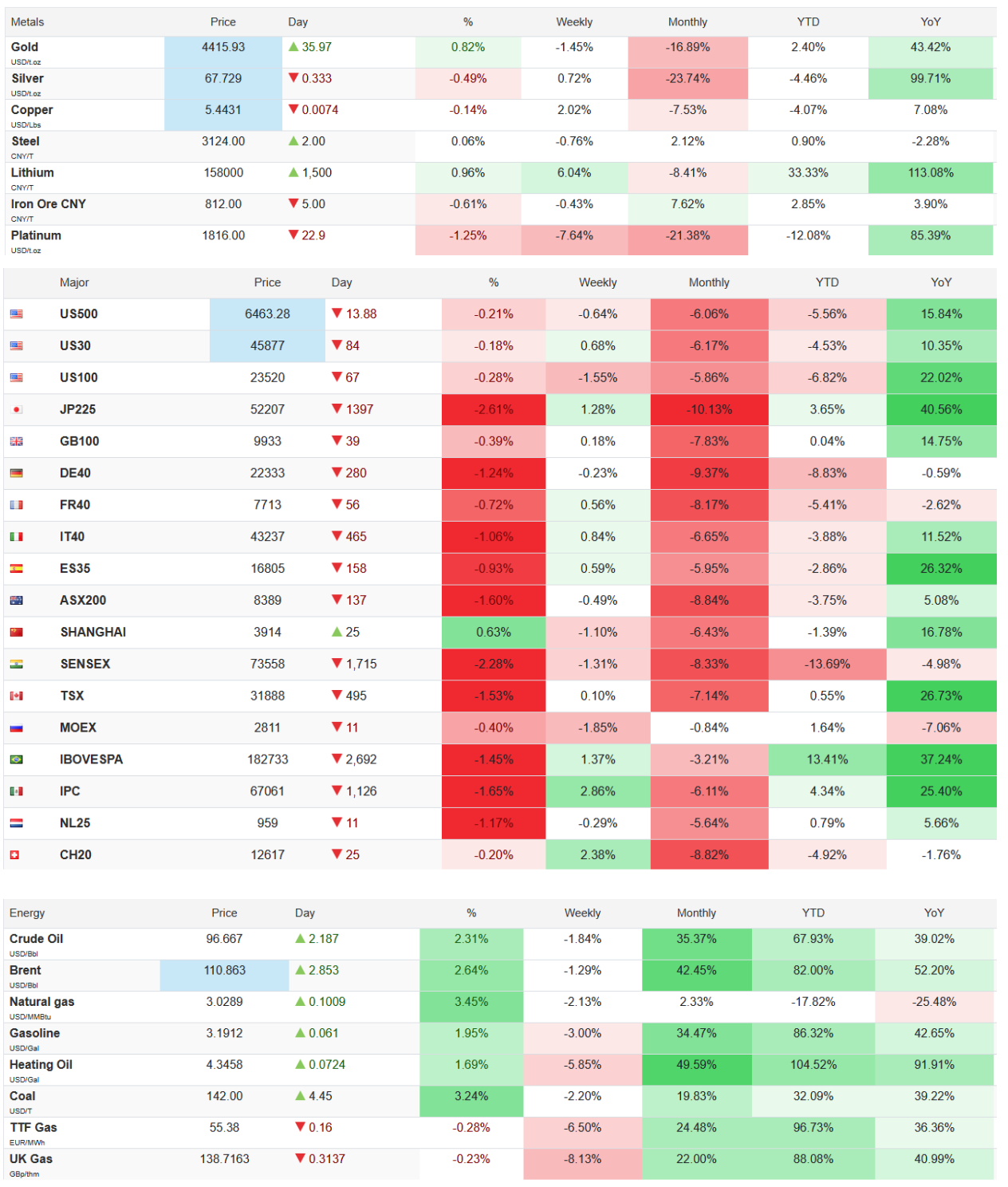
by Kotsiakis George