


Markets are often tested most during periods when geopolitics, energy dynamics, and monetary policy converge at the same time. The week ahead represents precisely such a moment. Developments surrounding Iran and the Strait of Hormuz, the Federal Reserve’s upcoming meeting, the heightened volatility associated with triple witching, and the discussions shaping the agenda of the anticipated meeting between Donald Trump and Xi Jinping are creating an environment in which financial markets must rapidly adapt to a new geo-economic landscape.
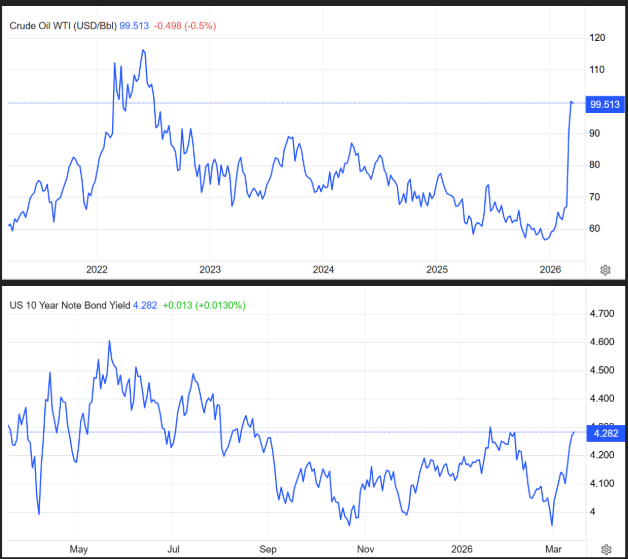
Tensions surrounding Iran have once again brought the strategic importance of the Strait of Hormuz to the forefront. Roughly 20% of the world’s oil supply passes through this narrow maritime corridor each day, making the security of the region critical for global economic stability. The initiative by the United States to establish a broader framework of cooperation with other countries aimed at safeguarding navigation through Hormuz signals clearly that major economies are seeking to ensure the continuity of energy flows and prevent a prolonged disruption in global energy markets.
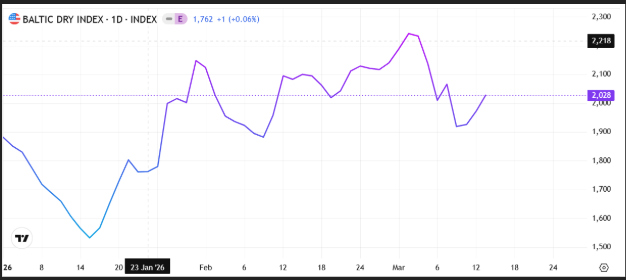
Markets initially reacted with heightened volatility. Global economies remain particularly vulnerable to energy shocks, given their strong dependence on imported energy and the stability of global trade flows.
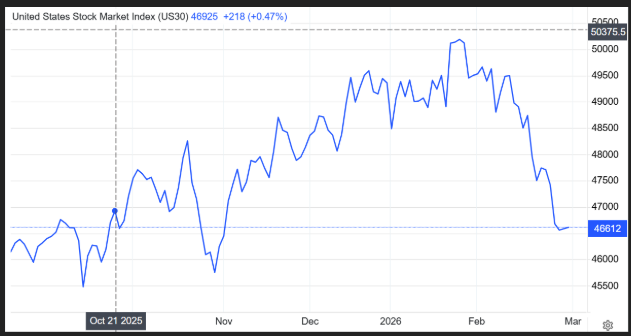
In contrast, U.S. markets appear considerably more resilient, with losses in the major indices remaining comparatively limited. This divergence once again reinforces the role of the United States as a primary destination for international capital during periods of uncertainty. Despite the recent correction in equity indices, the overall market capitalization of the U.S. stock market continues to hover near historic highs, approaching $63.5 trillion.
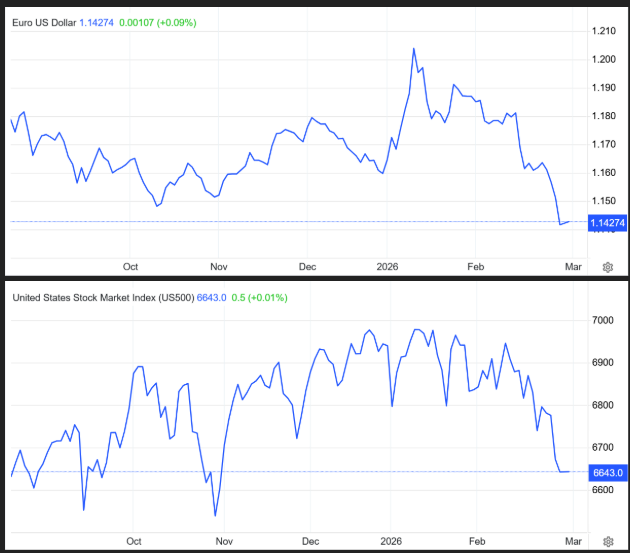
At the same time, the strengthening of the U.S. dollar confirms the enduring confidence of international investors in the American currency. Despite ongoing discussions in recent years about the potential de-dollarization of the global economy, every major geopolitical crisis appears to reinforce the dollar’s role as the world’s primary safe-haven asset.
The energy dimension of the crisis is also influencing the broader geopolitical environment. Tensions in the Middle East are once again highlighting Europe’s energy security challenges. Instability in the region is forcing European governments to reassess their energy strategies with greater urgency and realism, at a time when the continent’s economies are still coping with the consequences of the energy crisis of recent years.
This development may also influence the dynamics surrounding the war in Ukraine. As global energy markets face renewed pressure, the cost of maintaining multiple geopolitical conflicts simultaneously is rising for Western economies. Temporary exemptions granted by the United States to certain countries for purchases of Russian oil, aimed at stabilizing global energy markets, demonstrate that in periods of intense energy pressure economic pragmatism often prevails over rigid geopolitical positioning.
For Europe, this situation creates a particularly complex equation. While sanctions against Russia remain in place, the need for energy stability is becoming increasingly urgent. In such an environment, pressure for a faster diplomatic development regarding the conflict in Ukraine may intensify, as European economies struggle to manage multiple geopolitical and energy challenges simultaneously.
The week ahead is also expected to be crucial for financial markets. The Federal Reserve meeting represents a central point of reference for investors, as any indication regarding the future path of monetary policy and interest rates could significantly influence capital flows across global markets.
At the same time, the so-called triple witching, the simultaneous expiration of a large number of derivatives contracts in equities, indices, and options, is likely to increase market volatility, as large institutional portfolios proceed with position adjustments and portfolio rebalancing.
On the geopolitical front, particular attention is also being focused on the anticipated three-day meeting later this month between Donald Trump and Chinese President Xi Jinping. Relations between the world’s two largest economies continue to shape global trade and supply chains. Any signals of de-escalation in trade tensions or the announcement of new forms of cooperation could have a meaningful impact on global risk sentiment.
Based on the analytical systems we use and several specific statistical models we monitor across international markets, there are indications that the lowest levels of the recent market correction have likely already been reached. Historically, markets tend to priced in geopolitical crises well before their actual resolution, often leading to sharp but relatively short-lived corrections.
Against this backdrop, we believe the current week may mark the beginning of a more meaningful market rebound. At the same time, as tensions surrounding Iran begin to be absorbed by energy markets and global energy flows adjust to the evolving situation, we may also see a significant correction in oil and gasoil prices, potentially moving to levels notably lower than those seen before the outbreak of the conflict.
In every major geopolitical crisis, markets typically pass through a phase of heightened uncertainty before adapting to a new reality. History shows that financial markets rarely wait for conflicts to be fully resolved before reacting; instead, they begin to price in future developments much earlier.
Markets now appear to be approaching a turning point. And as often happens in the history of investing, the greatest opportunities tend to emerge precisely now when uncertainty reaches its highest levels. 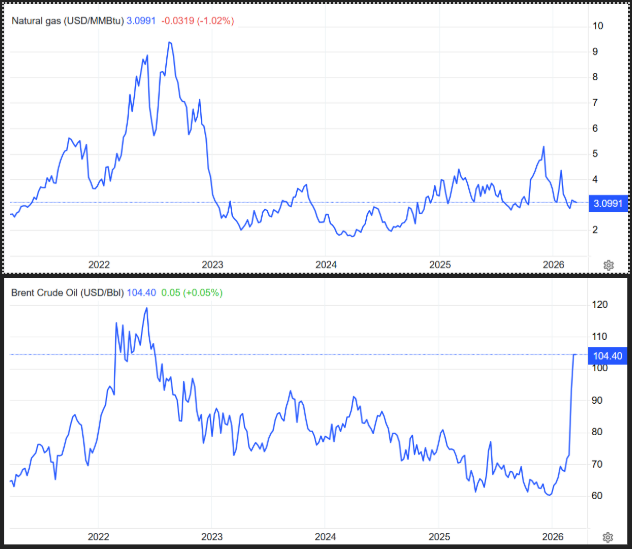
by Kotsiakis George