


The generation entering Yachting today is often described with a simple phrase: “they can’t endure like the old ones.” The phrase is repeated so often it sounds self-evident, yet it almost never describes reality.
People rarely become less capable of enduring; they simply stop cooperating with what lacks internal logic. This is exactly what maritime activity now encounters in its most human segment, Yachting. Neither the sea nor its demands have changed. The relationship between the human being and work has.
Previous generations chose the vessel mainly for what it could offer them: stability, experience, income, prospects. The newer generation approaches it differently. It does not begin from “what will I gain,” but from “what does it mean that I am here.” The profession ceases to be only a means and becomes an element of identity. This does not merely alter expectations; it changes the way someone learns, collaborates, and ultimately performs.
When motivation is external, behavior is shaped by control. When it is internal, it is shaped by understanding.
For decades shipping functioned through the transmission of experience. The younger observed, repeated, matured. The system was effective because there was no alternative. Today, however, a generation appears that grew up in environments where every function is explained before it is used. Thus, when a procedure is presented without reason, it is not perceived as tradition but as absence. The organization interprets this as challenge, while in reality it is a search for coherence.
The distinction is subtle yet decisive: discipline is not rejected; opacity is.
Yachting senses this shift earlier than any other maritime field, because here the result of work is immediately human. The guest evaluates not only the correctness of service but the feeling received. The new generation of crews understands that hospitality is not limited to executing instructions….it is the reading of a situation. It does not merely seek to learn the process but to understand the person it serves. Service stops being a role and becomes perception.
This is where the great misunderstanding emerges. Many believe younger professionals seek ease, while in practice they seek consistency. They accept responsibility when it is clear, intensity when it has purpose, hierarchy when it has meaning. When these are absent, compliance may exist superficially but ceases to be genuine. And a vessel function only when cooperation is authentic, not formal.
At this point the role of leadership also changes form. The authority of rank alone is no longer sufficient to move the mechanism. The leader is called to make visible what each decision protects. When the crew understands the framework, procedures are followed more precisely with less supervision. Responsibility ceases to be external enforcement and becomes internal choice. Discipline does not diminish; its source shifts.
Thus, seamanship is not abandoned but re-founded.
Experience remains essential, yet it must be understandable to be transmitted. Tradition is preserved not because it is imposed but because it is explained. The younger seafarer does not settle for copying the movement of the older; he seeks to comprehend the judgment behind it. Through this process, knowledge transforms from habit into conscious competence.
For years maritime training taught people to manage the voyage. The new generation wants to understand the reason for the voyage. If Yachting answers this need, it will not merely attract younger crews. It will gain professionals who do not simply work on the vessel, but consciously participate in its meaning.
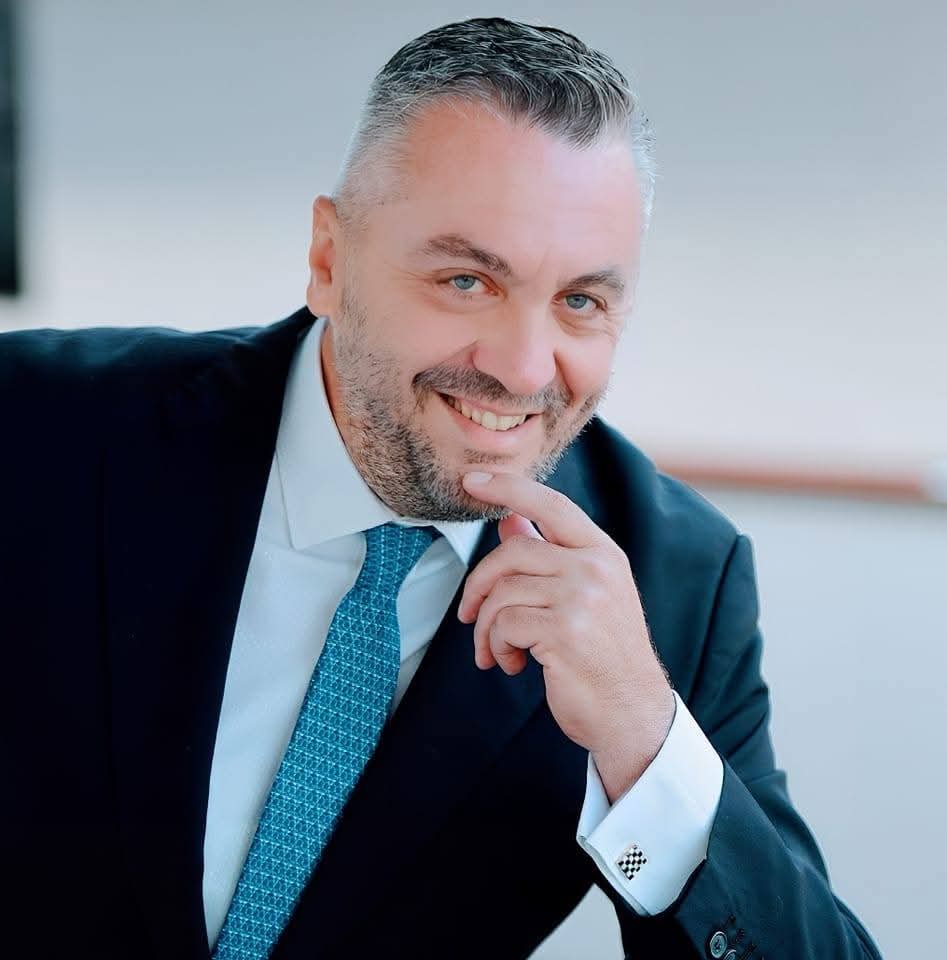
Mr. George Parisis is a Captain MMa and holds an MSc in Marine Engineering Management from the University of Greenwich D.M – Shipping Instructor and has previously served as Head of the Education Committee, while he currently acts as a Scientific Advisor in Crew Education and Training for HYCA (Hellenic Yacht Crew Association).
Furthermore, he serves as a Scientific Collaborator in the fields of Smart Spatial Planning, Contemporary Marina Development, Yachting Strategy, and Maritime Education for ENPEN (Union of Shipping Agents of the Greek Islands).
He has also recently published his first book, “Yachting Manifesto,” released by Update Productions.