



By Dr. Gaby Bornheim, President German Shipowners’ Association (VDR)
Europe’s strength does not end at its borders. It extends far beyond them, carried by ships that connect the continent to the world.
In a time of shifting geopolitical balances, evolving trade patterns and intensifying strategic competition, this connection is no longer just an economic convenience. It is a foundation of stability. Shipping ensures that energy flows, industries operate and societies remain supplied. It keeps Europe open and, in doing so, preserves its ability to act.
European shipping is not a marginal player in this system. It is one of its defining forces. European shipowners control around 35 percent of the global fleet, with particularly strong positions in tanker, container and bulk shipping. This presence reflects more than scale. It reflects sustained relevance in a global system that is becoming more complex, more contested and more strategically shaped.
Shipping is often described in economic terms. In reality, its significance goes much further. It determines access — to markets, to resources, to partners. It shapes how quickly economies can respond to disruption and how reliably they can function under pressure. Maritime capacity is therefore not only part of Europe’s economic infrastructure. It is part of its strategic architecture.
This becomes most visible when systems are under strain. In moments of disruption, it is merchant vessels that ensure continuity.
They deliver essential goods, support humanitarian operations and, where necessary, provide logistical capacity for the transport of military equipment and personnel. Civilian shipping operates at the intersection of economy and security. It is not separate from Europe’s ability to act — it enables it.
At the same time, the global environment in which shipping operates is evolving. Trade routes are shifting, geopolitical considerations are gaining weight and new actors are expanding their maritime presence. Shipping is increasingly understood not only as a commercial activity, but as a means of influence.
For Europe, this changes the perspective. The question is no longer whether shipping matters. The question is whether Europe is prepared to maintain and strengthen its position within it.
The answer lies in the structure of European shipping itself. Its strength does not come from a single model, but from the interaction of different traditions and capabilities.
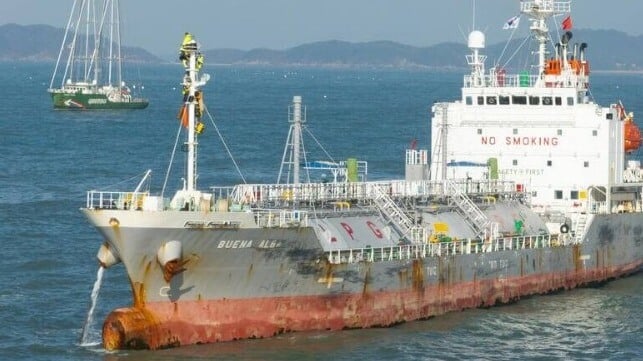
Greece has long been at the centre of global maritime activity. Greek shipowners control a substantial share of European tonnage and play a defining role in tanker shipping worldwide. The Greek tanker fleet is one of the key pillars of global energy transportation. Its resilience is rooted in experience, global reach and the ability to operate successfully across market cycles.
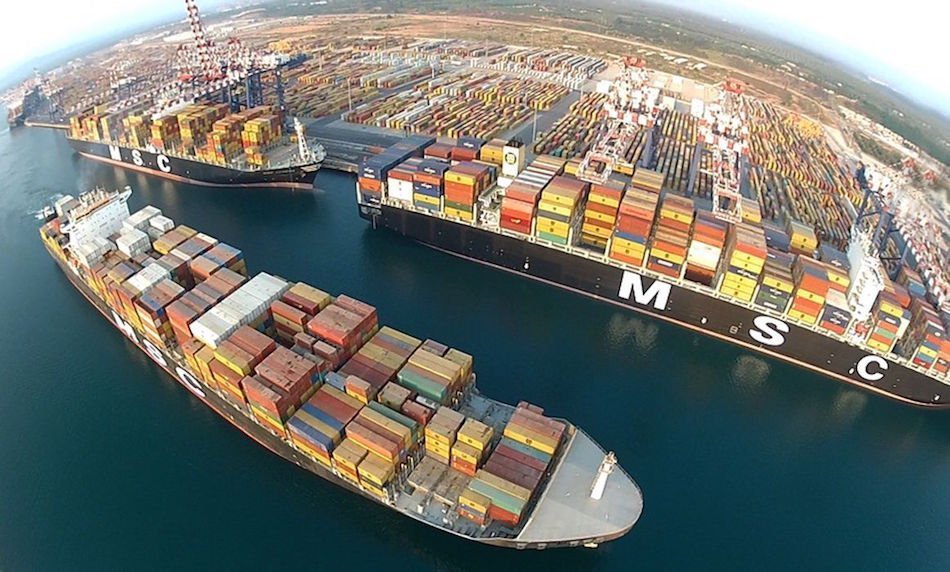
Germany represents a different, but equally essential dimension. German shipping is closely integrated into industrial and logistical value chains. In both container and bulk shipping, German operators have set global benchmarks over decades and continue to play a central role in international supply chains.
These profiles are not competing approaches. They are complementary strengths. Together, they illustrate a defining feature of European shipping: its ability to combine diversity into a coherent and highly effective system.
European shipping operates across borders by design. Ownership structures, financing models and operational networks are inherently international. This creates flexibility, resilience and global reach. It also means that Europe’s maritime strength is collective in nature.
This collective dimension is decisive. No single European country could maintain the same level of global influence on its own. Together, however, European shipping forms one of the most powerful maritime clusters in the world.
Yet this position cannot be taken for granted. Shipping is a global industry in which capital, expertise and operations are highly mobile. Decisions about where ships are managed, financed and deployed are shaped by regulatory frameworks, economic conditions and political signals.
This creates a clear responsibility. If Europe wants to retain its maritime strength, it must ensure that shipping remains competitive and attractive as a place of business.
This is particularly important in the context of the energy transition. The decarbonisation of shipping is both necessary and inevitable. It is one of the most significant transformations the sector has ever faced. At the same time, the path forward remains complex. Technologies are evolving, fuel availability is uncertain and global standards are still emerging.
In such a context, regulatory approaches must be carefully designed. Measures that are not internationally aligned or that disregard operational realities risk weakening Europe’s maritime base without delivering meaningful environmental benefits. The objective should not be to lead in isolation, but to shape solutions that are effective, realistic and globally adopted.
Competitiveness and sustainability are not opposing objectives. They are interdependent. A strong European shipping sector is a prerequisite for a successful transition.
At its core, the resilience of European shipping lies in its structure. A diversified fleet, specialised market segments and a dense network of maritime services provide stability. Equally important is a culture of cooperation that allows actors across countries and sectors to operate as part of a shared system.
This system has proven its strength over time. It adapts, absorbs shocks and continues to function even under pressure. But resilience is not static. It must be maintained.
Shipping also offers a broader lesson for Europe. It shows that openness and connectivity are sources of strength, not vulnerability. It demonstrates that cooperation enhances competitiveness rather than limiting it. And it underlines that influence in a globalised world is built not through isolation, but through presence and participation.
Europe’s merchant fleet is one of its most valuable strategic assets. It secures supply, enables trade and gives the continent reach and relevance far beyond its geographical borders.
Maintaining this strength requires clarity and commitment. Because in the end, Europe’s connection to the world is not an abstract idea. It is carried — quite literally — by its ships.