


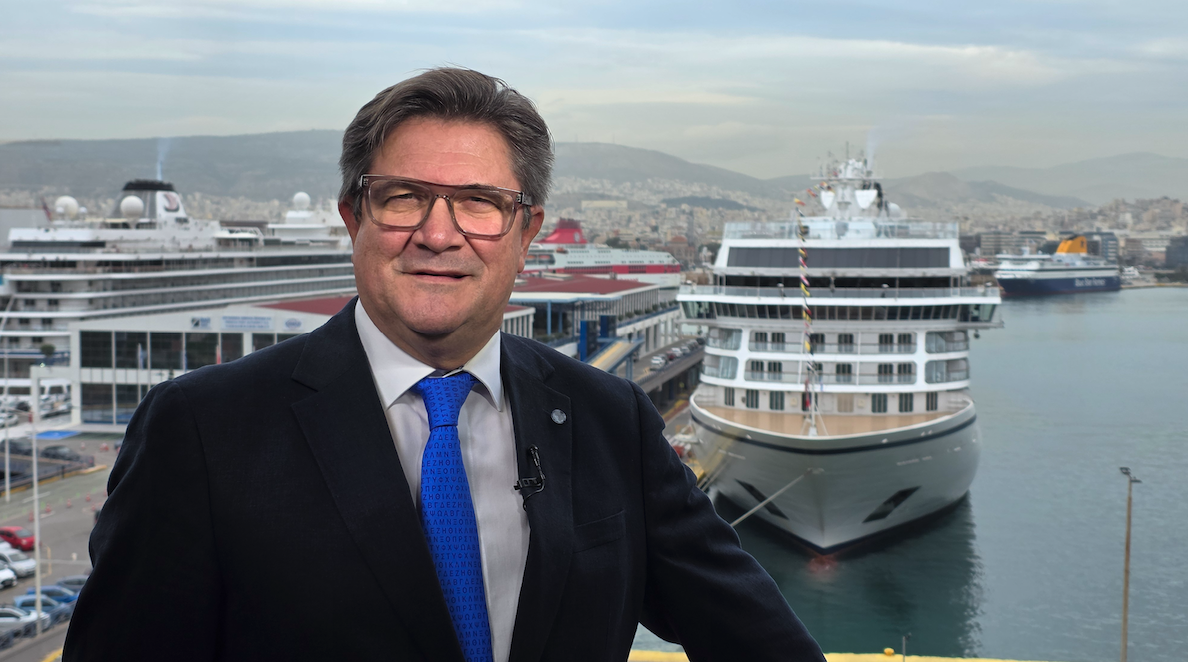
COSCO's new shipping service to Astakos, investments in Piraeus, and the growing influence of two major European shipping groups are creating new opportunities for the Greek economy.
COSCO's first vessel, Yuan He Kou, arrived today.
By George Xiradakis*
Piraeus, 23 November 2026
The global automotive industry is undergoing a profound restructuring, with China emerging as one of the world's leading automobile manufacturers and exporters. The rapid expansion of electric mobility, China's growing manufacturing capacity, and new European Union trade policies are reshaping the balance of power in the international automotive market.
At the heart of these developments lies the shipping industry. Automobile transportation is becoming an increasingly strategic sector, where the availability of specialized vessels, port infrastructure, and international distribution networks are decisive factors in competitiveness.
For Greece, these developments are particularly significant. COSCO SHIPPING's new maritime connection to Astakos, investments in the Piraeus Car Terminal, the strong presence of the Grimaldi Group in Igoumenitsa, and the international investment activities of Neptune Lines, under the leadership of Melina Travlos, are creating the conditions for Greece to emerge as a major European hub for automobile transportation and distribution.
COSCO's New Strategic Move in Astakos
COSCO SHIPPING's recent announcement of a direct Ro-Ro shipping service from Xiaomo Port in Shenzhen to Astakos represents a particularly important development for Greece's port economy.
In early November 2026, the vessel Yuan He Kou, with a capacity of 7,000 vehicles, departed China carrying 4,898 new-energy vehicles bound for Astakos.
The new connection offers an estimated transit time of approximately 20 days, nearly one-third shorter than conventional shipping services. From Astakos, further distribution is planned to European ports, including Zeebrugge in Belgium, Koper in Slovenia, and Valencia in Spain.
The selection of Astakos carries considerable geoeconomic significance. Located in western Greece, the port offers strategic access to the maritime corridors of the Adriatic and Mediterranean Seas.
This new service is more than an additional commercial shipping connection. It reflects China's broader strategy of integrating industrial production with the development of owned or controlled transportation capacity and comprehensive logistics networks.
This is a model of vertical integration in which the competitiveness of the final product depends not only on manufacturing costs but also on the speed, reliability, and cost of delivery to international markets.
It should nevertheless be clarified that the launch of this new service represents a confirmed commercial initiative, rather than necessarily a completed capital investment by COSCO in Astakos port facilities.
The port's further development will depend on cargo volume stability, vessel call frequency, and the infrastructure required to support future operations.
Piraeus and COSCO's Investment Strategy
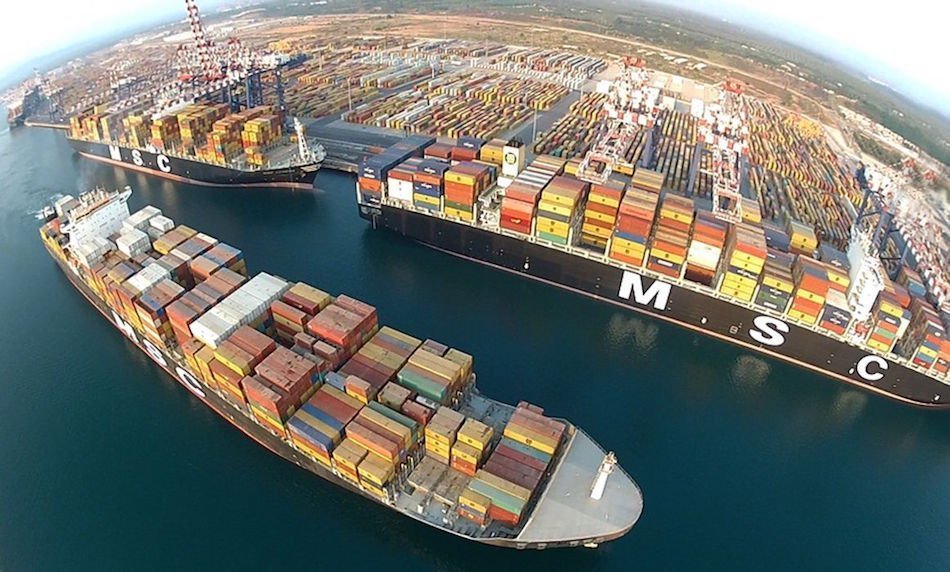
The developments in Astakos should be considered alongside COSCO's long-standing investment presence in the Port of Piraeus.
The modernization of the Car Terminal represents an important component of the Piraeus Port Authority's development strategy.
The expansion at the Herakleous Pier, with an initial budget of approximately €20 million, significantly increased the available space for vehicle storage and handling.
At the same time, the Piraeus Port Authority's investment plans include additional logistics facilities and multi-storey parking infrastructure aimed at further increasing the port's operational capacity.
Piraeus already possesses well-established infrastructure and extensive experience in vehicle transshipment to the Eastern Mediterranean, the Balkans, and the Black Sea.
The new connection with Astakos creates opportunities for two Greek ports to operate in a complementary manner, each benefiting from distinct geographical and operational advantages.
Piraeus can maintain and strengthen its position as an established transshipment center, while Astakos can develop specialized activities serving the Western Mediterranean and Adriatic markets.
Grimaldi: The Strategic Investment in Igoumenitsa
The presence of the Italian Grimaldi Group in Greece adds another important dimension to these developments.
The acquisition of a 67% stake in the Igoumenitsa Port Authority for €84.17 million represents one of the most significant investments in the Greek port sector.
The Grimaldi Group has extensive international experience in Ro-Ro, Ro-Pax, and automobile transportation, supported by a comprehensive network of shipping services across Europe and international markets.
Igoumenitsa already serves as an important gateway connecting Greece with Italy and Central European markets.
Grimaldi's strategic presence creates opportunities for further development of port infrastructure and services, particularly in multimodal transportation.
A potential increase in Chinese automobile traffic through western Greece could create new opportunities for cooperation and more effective utilization of existing Adriatic shipping services.
Under appropriate commercial and operational conditions, Igoumenitsa could develop into a complementary vehicle distribution hub serving Italy and the European hinterland.
It is important to emphasize that this does not represent an officially announced cooperation between COSCO and Grimaldi in this particular sector. Rather, it constitutes a promising opportunity arising from the geographical positioning and infrastructure of their respective networks.
Neptune Lines: Greek Shipping Entrepreneurship in the Emerging Market
Alongside the investments of major international groups, the dynamic presence of Neptune Lines, under the leadership of Melina Travlos, is of particular importance.
Neptune represents a characteristic example of Greek shipping specialization in automobile transportation and the development of integrated logistics services.
Its Genesis Project investment program includes four modern Pure Car and Truck Carriers (PCTCs), each with a capacity of 4,200 vehicles, currently being constructed in China.
This investment highlights both the group's commitment to fleet renewal and the importance of Greek-Chinese cooperation in shipbuilding.
At the same time, Neptune is expanding its activities beyond maritime transportation by investing in port facilities and distribution services.
Through Neptune Land Services, the company has undertaken the management of a new vehicle terminal at Port-La-Nouvelle in southern France under a 20-year agreement.
This represents an important step toward developing an integrated automotive supply chain.
Furthermore, Neptune's cooperation with COSCO in distributing vehicles from Piraeus to Mediterranean and Black Sea markets demonstrates that Greek shipping entrepreneurship can actively participate in shaping new international trade networks.
Neptune's activities highlight a fundamental competitive advantage of Greek shipping: its ability to adapt to changing market requirements and invest in specialized, high-value-added services.
European Restrictions on Chinese Automobile Imports
These developments are taking place against a backdrop of increasing trade tensions between the European Union and China.
Since October 2024, the European Union has imposed additional countervailing duties on battery electric vehicles originating from China, ranging from 7.8% to 35.3%, depending on the manufacturer, on top of the standard import tariff.
European policy aims to address the effects of state subsidies while protecting the competitiveness of the European automotive industry.
At the same time, discussions have emerged regarding additional restrictions on imports of Chinese hybrid vehicles.
However, the quotas under discussion should not be confused with the tariffs that have already been formally introduced.
Europe faces a complex challenge: protecting its industrial production and employment while maintaining access to competitively priced products and emerging technologies.
From a shipping perspective, these restrictions could influence the pace of growth in Chinese automobile imports and, consequently, demand for specialized maritime transportation.
Nevertheless, trade restrictions should not automatically be interpreted as leading to an equivalent reduction in overall transportation demand.
The establishment of Chinese automobile manufacturing facilities in Europe may reduce imports of finished vehicles while simultaneously generating new trade flows involving components, batteries, and intermediate products.
The shipping industry will therefore need to adapt to changing geographical and commercial patterns.
A New Strategic Opportunity for Greece
The simultaneous presence of COSCO, Grimaldi, and Neptune Lines creates a particularly promising opportunity for the Greek maritime economy.
These three groups possess different but potentially complementary competitive advantages.
COSCO combines access to Chinese industrial production with substantial international shipping capacity and port infrastructure.
Grimaldi maintains a strong position in the European Ro-Ro market, supported by an extensive network of connections with Italy and the European hinterland.
Neptune contributes specialized Greek maritime expertise, a modern fleet, and integrated automobile transportation and distribution services.
The combined utilization of these capabilities could significantly strengthen Greece's position within the European automotive logistics landscape.
Piraeus, Astakos, and Igoumenitsa have the potential to evolve into complementary hubs within a broader transportation and logistics system.
Such a development does not necessarily require a single commercial partnership among the three groups.
It does, however, require competitive port infrastructure, efficient inland transportation connections, a stable regulatory environment, and a coordinated development strategy.
From Geographical Advantage to Economic Value Creation
Greece possesses a unique combination of competitive advantages: a strategic geographical position, strong maritime entrepreneurship, extensive international trade relationships, and significant port infrastructure.
New investments and commercial initiatives in automobile transportation provide an opportunity to capitalize on these advantages in a more integrated manner.
Greece can develop activities involving vehicle storage, technical preparation, customs clearance, inland distribution, shipping finance, and specialized logistics services.
Such an approach could create new employment opportunities, attract additional investment, and strengthen the contribution of shipping to the Greek economy.
The real challenge is not simply to increase the number of vehicles handled through Greek ports.
It is to increase the share of the total economic value generated by international transportation that remains within the Greek economy.
COSCO's new shipping service to Astakos, investments in Piraeus, Grimaldi's presence in Igoumenitsa, and Neptune's international activities represent different aspects of a common reality: Greece has the potential to assume a more prominent role in emerging global supply chains.
At a time of growing trade protectionism and geoeconomic realignment, Greek shipping has an opportunity to act as a bridge connecting different markets and facilitating international cooperation.
Greece should not limit itself to becoming merely an entry gateway for Chinese automobiles into Europe.
Instead, it should aspire to become an integrated European hub for maritime transportation, port services, and automobile distribution, regardless of the vehicles' country of origin.
Because in today's global economy, geography creates opportunities, but it is maritime entrepreneurship, investment, and strategic cooperation that transform those opportunities into genuine economic strength.
George Xiradakis*
President, Association of Banking and Financial Executives of Hellenic Shipping (ABFEHS)
CEO, XRTC Business Consultants Ltd
Vice President, Hellenic-Chinese Chamber of Commerce
Board Member, China Institute of Navigation