

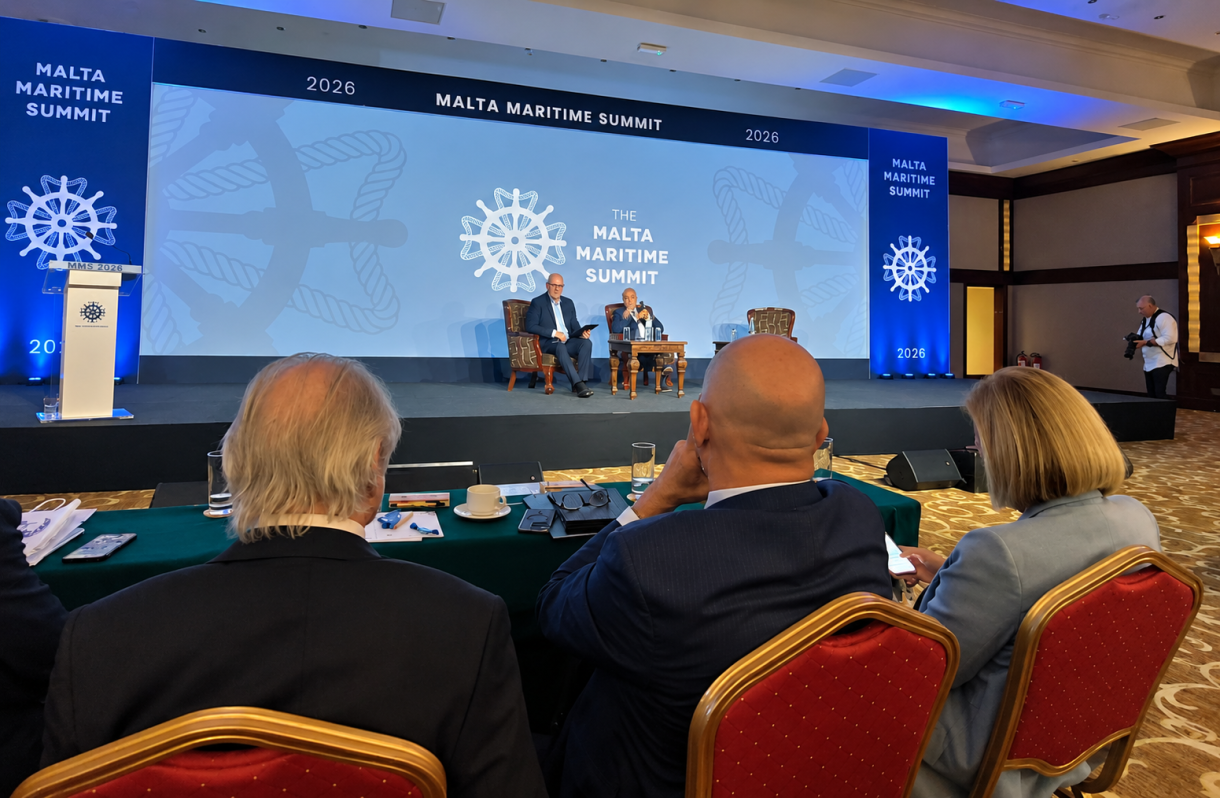
The international discussions in Malta highlight the challenges facing European ports, from the EU ETS to route security and investment.
VALLETTA – Geopolitical tensions, the competitiveness of European shipping and the contradictions of the energy transition were at the heart of the debate at the Malta Maritime Summit 2026, reflecting an industry called upon to grapple with increasingly complex international dynamics. Among the key figures taking part in the discussions was Gian Enzo Duci, who moderated the session dedicated to ship recycling and offers a privileged perspective on the sector’s dynamics. His analysis goes beyond the Summit’s proceedings, prompting reflection on the role of the Mediterranean and Italy’s ability to influence the decisions reshaping global maritime trade.
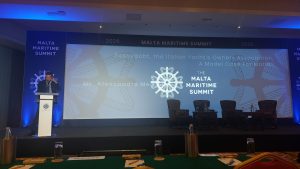
For four and a half days, Malta once again took centre stage in the international maritime debate. From 5 to 9 October, the tenth edition of the Malta Maritime Summit brought together institutions, shipowners and professionals from the world’s leading shipping markets on the island. The title chosen for the tenth anniversary, “The Voice of the Industry”, was more than a statement of intent. It expressed the ambition to provide the industry with a forum for dialogue with regulators at a time when wars, protectionism and the energy transition are reshaping routes, investments and competitive balances.
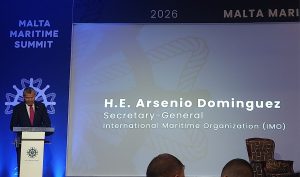
The calibre of the participants alone was enough to convey the scale of the event. Alongside International Maritime Organization Secretary-General Arsenio Dominguez was Thomas A. Kazakos, Secretary-General of the International Chamber of Shipping, together with European Commissioner for Fisheries and Oceans Costas Kadis, representatives of governments and ship registries, and some of the most authoritative names in international shipping: from Emanuele Grimaldi to John Lyras, former president of ECSA (European Shipowners’ Association) and UGS (Union of Greek Shipowners), from Danaos Corporation Chairman and CEO John Coustas to Marily Frangista, managing director of Franco Compania Naviera and president of the Malta International Shipowners’ Association (MISA). The participation of several specialist media outlets, from Lloyd’s List to the Greek weekly Maritime and Ship Management International, completed the profile of an event designed for a global audience.
The Malta Maritime Summit has increasingly established itself not as the maritime conference of a small island state, albeit one home to the European Union’s largest ship registry, but as the event through which the Mediterranean seeks to connect its own agenda with that of global shipping.
Malta can perform this role because, over time, it has built a recognisable system around its flag, encompassing administration, services, finance and consultancy. John A. Gauci-Maistre, the event’s founder, invited delegates to translate their discussions into proposals to be submitted to the relevant authorities and international bodies. Under this approach, the voice of the industry is not asking for fewer rules: it is calling for rules that are enforceable, consistent and capable of taking the global nature of the sector into account.
The sea that provided the backdrop to the proceedings, however, is no longer the reassuring one depicted on old trade maps. Ships are being attacked in the Red Sea, while tensions and controls are intensifying along strategic passages. Sanctions, tariffs and hybrid threats are changing routes and costs.
A consistent message emerged from different sessions: neither civilian vessels nor seafarers can be turned into targets or instruments of military pressure. Drones, mines, cyberattacks and interference with positioning systems have now erased the distinction between commercial risk and geopolitical risk. Protecting freedom of navigation means safeguarding crews, but also ensuring the continuity of supplies and access to essential goods.
It is against this backdrop that maritime multilateralism is once again becoming a practical necessity rather than a diplomatic formula. The session dedicated to governance linked rules, tariffs, sanctions and the ability to enforce them. Without shared standards, competition between flags and jurisdictions inevitably rewards those offering fewer safeguards. Yet regulation that ignores costs and competitive effects ultimately risks favouring precisely those operators that are less transparent. The presence of the IMO Secretary-General gave the discussion particular significance: while unilateral responses prevail in many areas, shipping continues to need global rules and the most uniform application possible.
Italy’s contribution across ports, finance and innovation
Against this backdrop, Italy’s participation was significant not only in terms of numbers, but also for the diversity of expertise represented. Pino Musolino, former president of MEDPorts and of the Port Network Authority of the North-Central Tyrrhenian Sea, brought the perspective of Mediterranean ports to the discussion on geopolitics and macroeconomic consequences.
Marika Gillardo, manager at Circle Group and a member of the YoungShip Italia board, spoke on the digital revolution at sea, highlighting the role of younger generations and innovation applied to logistics chains. Italy’s presence thus connected infrastructure, technology and human capital, three components that too often follow separate paths in the country’s national debate.
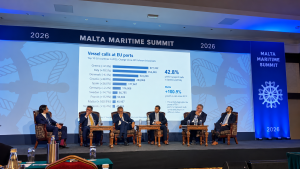
Italy’s contribution also extended to regulatory, financial and industry-association issues. Alberto Rossi, Secretary-General of Assarmatori and a lawyer specialising in maritime, transport and port law, moderated the panel dedicated to the EU ETS and its competitive implications.
During the same session, Fabrizio Vettosi, managing director of VSL Investment & Advisory, highlighted the substantial investments already made by the shipping industry in decarbonisation, the growing adoption of Energy Saving Technologies and the results achieved in reducing emissions per tonne-mile.
The purpose of the panel was not to question the transition, but to prevent it from being reduced to an exercise in compliance or a marketing label, without acknowledging the industrial and financial efforts the sector has already undertaken. The discussion thus exposed a European contradiction: a measure designed to accelerate decarbonisation risks, if left uncorrected, diverting transhipment traffic to non-EU ports without reducing global emissions.
The financial perspective was complemented by the industrial and technological outlook presented by Dario Bocchetti, head of Energy Saving, Research & Development and Naval Architecture at the Grimaldi Group. His contribution demonstrated that decarbonisation depends not only on regulatory mechanisms or the price of emissions, but also on ship design, energy efficiency, innovation in onboard systems and investment programmes capable of delivering measurable reductions in consumption. It is through applied technology, even before declarations of intent, that the European shipping industry’s ability to lead the transition is measured.
Alessandro Panaro, head of the Maritime & Energy department at SRM, placed the green transition within a broader Mediterranean perspective. Sustainability and the Blue Economy, green ports and Net Zero targets are intertwined with port competitiveness, energy security, connectivity and the reshaping of trade routes and logistics chains. His contribution served as a reminder that the Mediterranean is not merely an area exposed to geopolitical shocks, but also a laboratory in which ports, businesses and institutions can build new balances between growth, energy and environmental protection. Enrico Molisani, managing partner of WEGAL, added an international perspective on maritime disputes and insurance risks. Roberto Demarchi, vice-president of Assagenti, outlined the collaboration between the Summit and Genoa Shipping Week.
The professional and generational dimension was also represented by contributions from lawyer Francesco Saverio Lauro and Nicolò Iguera. The former brought to the discussion extensive experience in maritime law and in advising the shipping industry, while the latter, president of YoungShip Italia, gave a voice to a generation called upon not merely to enter the sector, but to transform it by connecting expertise in insurance, technology and management.
Taken together, these contributions showcased a diverse Italian maritime sector, capable of bringing experience and generational renewal together, combining business representation with emerging professional expertise.
The session dedicated to the final voyage of ships, “The Last Voyage: Rethinking Ship Recycling”, moderated by Gian Enzo Duci, also demonstrated the quality of Italy’s contribution to shaping the agenda. Ship recycling is simultaneously an environmental, social and industrial testing ground: it concerns workers’ safety, materials traceability, the availability of compliant facilities and Europe’s ability to avoid outsourcing the costs of its own sustainability.
Rethinking it means moving from a disposal-based approach to one grounded in the circular economy, recognising that a ship retains value even at the end of its operational life.
A specific chapter concerns yachting, a sector in which the links between Italy and Malta are particularly strong. AssoYacht’s contribution brought the perspective of recreational vessel owners to the discussion, highlighting the need for institutional representation, regulatory certainty, contractual standards, training and qualified assistance for owners, captains and crews. In a market that is now international, yachting cannot be viewed merely as a luxury pursuit: it is an entire supply chain encompassing shipyards, marinas, refitting, services, tourism, employment and professional skills spread along the coasts.
Italy’s participation underscored how the Mediterranean can build closer cooperation precisely across this supply chain, without compromising quality and safety.
For Italy, its relationship with Malta is far from peripheral. The two countries share routes, traffic flows, port interests, professional networks and a particular responsibility in the central Mediterranean. Malta has succeeded in building a compact maritime ecosystem in which administration, the ship registry, legal consultancy, technical services and taxation all contribute to a clearly defined strategy. Italy has a much broader industrial, port and shipowning base, but still struggles to present it as an integrated system. The Maltese experience therefore offers a lesson: maritime competitiveness does not depend on a single incentive, but on policy continuity, administrative efficiency and the ability to speak abroad with a clear and coherent voice.
Energy transition and competitiveness: Europe’s dilemma
The day dedicated to the green transition sought to move the discussion beyond simple compliance and towards the transformation of operating models. It was precisely here that the political dilemma surrounding the EU ETS emerged. Europe aspires to be a bastion of freedom, strategic autonomy and logistical independence; yet it cannot adopt instruments that weaken its Mediterranean ports, increase dependence on external hubs and penalise operators subject to the strictest rules. The risk of maritime carbon leakage is not an argument against decarbonisation, but against an incomplete transition: if a ship changes its rotation to avoid a European port call, emissions do not disappear, while traffic, investment and monitoring capacity shift elsewhere.
The challenge, therefore, is to reconcile environmental ambition with geopolitical realism. The Mediterranean Sulphur Oxides Emission Control Area (Med SOx ECA), cleaner fuels, shore-side electrification and fleet renewal remain necessary steps, but they require uniform enforcement, adequate infrastructure and an international framework capable of preventing regulatory arbitrage. The Summit demonstrated that sustainability and competitiveness are not opposing objectives; they become so when regional regulation ignores the global nature of shipping and the particular exposure of European Mediterranean ports.
Malta’s shore-side electricity supply project for berthed ships follows the same direction. Shore-to-ship power can reduce local emissions, noise and the use of auxiliary generators, but it is no magic wand: it requires connections, interoperable standards, ship modifications and, above all, electricity generated in an increasingly sustainable manner. The Summit highlighted an insight that is equally relevant to Italy: shipping decarbonisation cannot be achieved by imposing a single winning technology, but by combining efficiency, electrification where possible, new fuels, fleet renewal and coordination between ports, shipowners and energy suppliers.
In this context, the financial commitment announced by the Maltese government in support of the IMO’s technical training fund is also significant. New rules are of little value if administrations lack trained personnel, monitoring systems and operational capacity. Supporting developing maritime countries is not merely an act of solidarity: it means strengthening the uniform application of conventions, reducing weak links in the chain and making the transition fairer. In maritime transport, a skills deficit within a single jurisdiction can have consequences extending far beyond its territorial waters.
Malta and Italy: towards a common Mediterranean agenda
The Malta Maritime Awards, presented on the opening evening of 5 October, combined the celebration of economic achievements with a message directed at younger generations. Shipping offers careers with substantial technical, legal, financial and digital content, yet it continues to be perceived as remote from everyday life. Making people, companies and innovations more visible helps bridge this gap. The new open category, based on nominations from the maritime community, also recognised that the most interesting innovations can emerge outside traditional classifications, at the intersection of disciplines and professions.
The honorary award presented to European Commissioner Costas Kadis for his contribution to marine environmental protection reaffirmed the link between European policy and ocean conservation. The Summit also rightly highlighted the human dimension of the sea. The charity art exhibition in support of Stella Maris, an international organisation that supports seafarers and their families, brought attention back to those who make the continuity of maritime traffic possible. After the lessons of the pandemic, forgetting seafarers would be not only unjust, but strategically short-sighted.
Perhaps the strength of the Malta Maritime Summit lies in its scale: international enough to bring together the IMO, governments and global industry leaders, yet sufficiently compact to allow direct dialogue between decision-makers and operators.
The island uses this position to present itself as a platform for mediation between Europe, the Mediterranean and international markets. Not everything that works in Malta can be replicated elsewhere, but its approach deserves attention: specialisation, stable engagement with public authorities, openness to international networks and an awareness that the sea is not just another economic sector, but a component of national identity and the economy.
For Italy, its presence in Malta should become the starting point for a more structured initiative across the Mediterranean. From this perspective, the twinning of the Malta Maritime Summit with Naples Shipping Week and the partnership with Genoa Shipping Week take on particular significance: not a simple exchange of logos, but the construction of a network linking three communities that share routes, expertise and regulatory challenges. Naples, Genoa and Malta can provide continuity to a common agenda covering security, the energy transition, digitalisation, training, yachting, ship registries and ship recycling, bringing a more clearly defined Mediterranean perspective to the European debate.