


Greece has been in the spotlight in recent months. Once considered a marginal player in Europe’s energy system, it is increasingly seen as strategically significant. Sitting at the crossroads of the Balkans, the Eastern Mediterranean, and within reach of North Africa and the Middle East, the country has always had a strong geographic position.
Yet, for decades, Greece has been unable to take advantage of this due to limited development of infrastructure, a complete absence of coordinated national planning and inadequate reforms. However, over the last few years, this seems to be changing.
From dependence to diversification
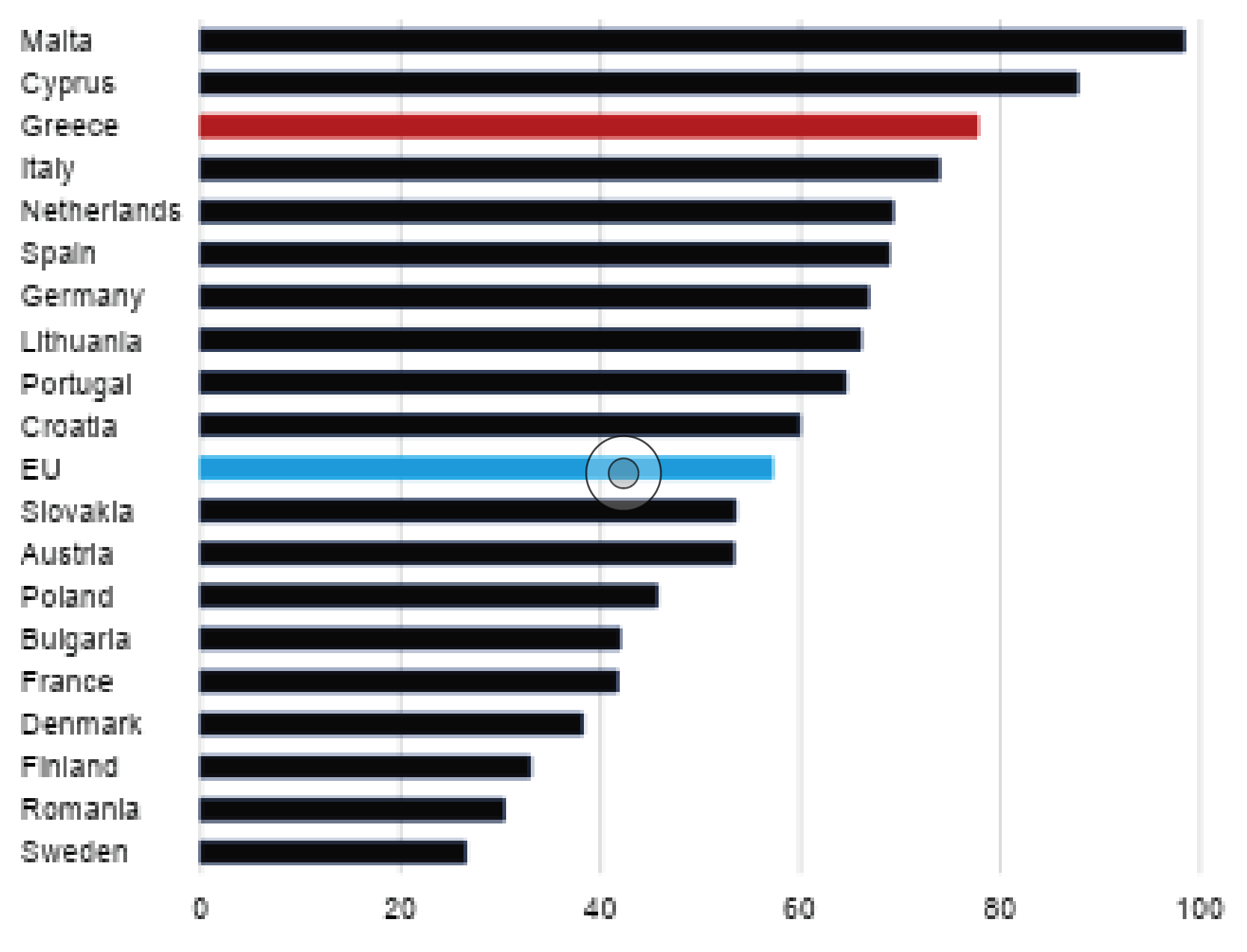
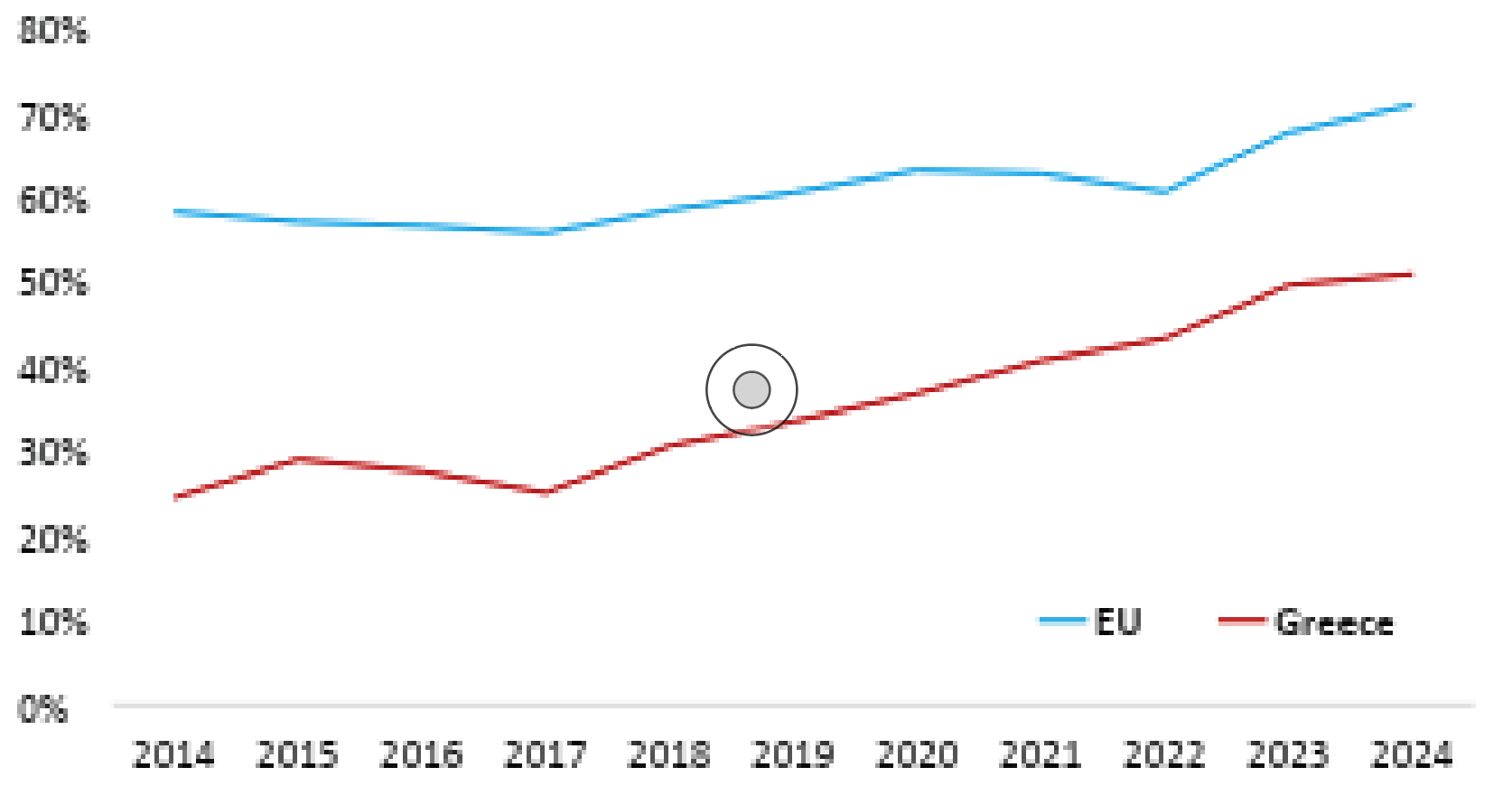
Since the 1970s, Greece’s energy system has relied on imported energy. Limited domestic production meant reliance on imported fuels, at levels consistently above the EU average, leaving the country exposed to supply disruptions and price volatility.
However, Russia’s invasion of Ukraine was a turning point, forcing the issue of energy security in Europe into the limelight and accelerating the rollout of green policies across the continent.
In response, Greece has stepped up its diversification efforts, expanding LNG infrastructure and fast-tracking renewable energy deployment.
Greece’s rise as a regional LNG player
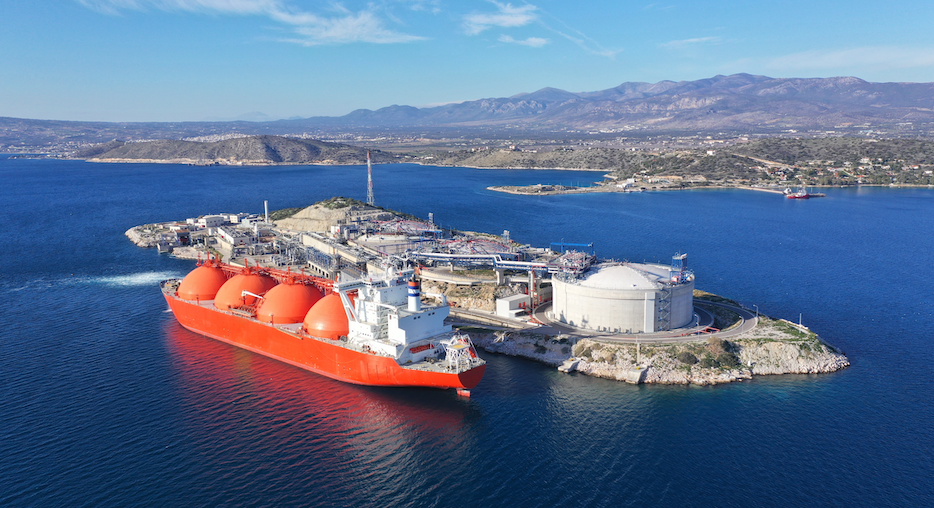
Greece’s LNG infrastructure has grown steadily over the last few years. The Revithoussa LNG terminal now has a regasification capacity of around 7 bcm per year, while the Alexandroupolis Floating Storage and Regasification Unit (FSRU), commissioned in 2024, added 5.5 bcm.
Together, these facilities provide over 12 bcm of LNG handling capacity annually, nearly double domestic gas consumption. Not only does this ensure a secure supply for the country, it has also created surplus capacity that can be distributed regionally.
A key part of this strategy is the Vertical Corridor, the gas network linking Greece’s LNG terminals with transmission systems across Central and Eastern Europe. It allows gas to flow south to north, helping countries in the region reduce their reliance on Russian supply.
With Russian imports due to end by late 2027, Europe is likely to face a tighter market. Greece’s LNG infrastructure, alongside plans for additional import capacity and recent US supply agreements, puts the country in a strong position as an entry point for non-Russian gas, particularly for Southeast and Eastern Europe.
Although it is moving in the right direction, to truly offer regional energy security, Greece will need to become a stronger player in facilitating trade and offering diverse sources of supply, as well as guaranteeing reliable delivery both domestically and to its neighbours. It will also need to expand its LNG storage, offer better trading platforms and credible emergency response mechanisms.
From power shortfall to regional force
A similar transformation has been underway in the power sector. With Greece’s National Energy and Climate Plan (NECP) targeting 80% renewable electricity by 2030, wind and solar capacity have expanded rapidly. The country has quickly become one of Europe’s leading solar markets, ranking third in the EU for electricity production from photovoltaics.
In 2024 and 2025, renewables accounted for roughly half of total electricity generation, with the remainder coming from natural gas. At the same time, coal use fell to historic lows and Greece became a net exporter of electricity in 2024, a trend that continued in 2025, reversing decades of net imports.
However, this rapid expansion now requires to be supported by flexible infrastructure and better coordination between generation and demand. Congestion and curtailment are already becoming more frequent. Electricity is being produced, but not always where or when it is needed. The system requires more storage, as well as stronger transmission links.
To address this, the country has set a national target of 5 GW of energy storage capacity by 2030, the grid access framework has been revised, and cross-border interconnections are being expanded, including the Greece-Bulgaria link as well as upgraded connections with North Macedonia and Albania. Successfully scaling these measures alongside accelerating renewable deployment will be crucial to sustaining system reliability and market efficiency.
From infrastructure to markets
Alongside physical infrastructure and regulatory reforms, market mechanisms are just as crucial. Formally established in 2018, the Hellenic Energy Exchange (HEnEx) was created to modernise Greece’s wholesale electricity and gas markets.
Since launching, HEnEx has been used to trade day-ahead and intraday electricity and, through its Natural Gas Trading Platform, supports trading in standardised gas products with prices published and cleared via its clearing house.
However, the platform is still in its infancy and trading volumes are still relatively modest, compared with larger European exchanges. For Greece to move beyond physical flows, its energy trading market will need to adapt just as quickly as its infrastructure.
Greece’s energy test
The real test for Greece lies in converting infrastructure and reforms into regional influence. Will the country move beyond being a mere transit route to become a true strategic energy hub? Its success will depend on its ability to provide a secure and uninterrupted supply for the region.
Greece has already made significant strides, but, to truly prosper, it will need to scale infrastructure, create a viable trading market and continue to implement reforms effectively. Only then will it be able to build on its geographic advantage.
About the author:
Dr Valentina Dedi is an Associate Director in Economics at KBR, where she leads economic and energy advisory work with a strong focus on the Middle East. She supports governments, global institutions, and industry leaders on high‑profile energy projects and strategic initiatives.
Greece’s Energy Role: Hub in the Making or Mere Transit Corridor?
Typography
- Smaller Small Medium Big Bigger
- Default Helvetica Segoe Georgia Times
- Reading Mode