



Why a System Designed for Shipping Cannot Fully Govern Experience
Why yachting is not shipping and why we still fail to understand it
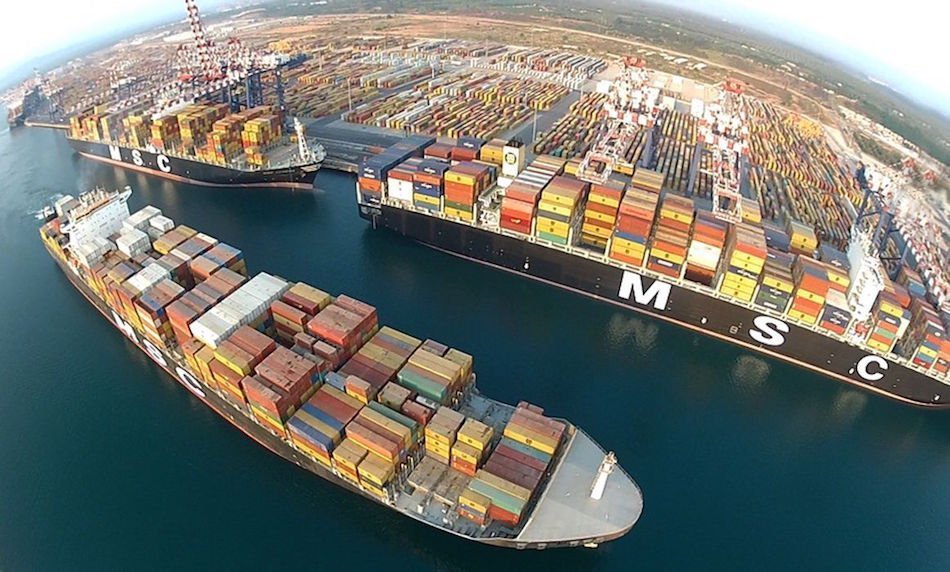
Modern commercial shipping has evolved through decades of systematic regulation, empirical knowledge, and institutional maturity. Its regulatory framework is built upon fundamental principles: predictability, standardization, repeatability, and control. These principles did not emerge theoretically, but as responses to real accidents, economic losses, and human tragedies. At its core, shipping regulation was designed to reduce uncertainty within an environment where vessels transport cargo and operate within clearly defined operational boundaries.
Yachting, however, constitutes a fundamentally different category of maritime activity. It is not merely a smaller or more luxurious version of commercial shipping. It is a system governed by a different operational logic. Here, the object of transport is not cargo, but people and not passive recipients of a service, but active components of the system itself. Experience, hospitality, privacy, and the continuous variability of expectations are integral elements of a yacht’s daily operation.
The attempt to regulate yachting using the tools of shipping has created a persistent tension between regulation and reality. This tension is not abstract. It manifests in crew decision-making, fatigue management, the quality of the guest experience, and ultimately, the level of safety achieved on board.
The core misunderstanding begins with equivalence. Commercial shipping was designed to minimize variability. Yachting, by contrast, operates within it. In shipping, procedures are repeated with precision and the human factor is deliberately constrained through systems and controls.
In yachting, procedures adapt daily, roles frequently overlap, and the human element cannot be constrained without undermining the very nature of the product. It must instead be cultivated, trained, and allowed to mature.
Regulations themselves are not the problem. The problem arises when they are applied without an understanding of the context in which they are expected to function. In yachting, this results in three recurring structural gaps.
The first concerns regulations designed with an emphasis on procedures rather than behaviors. Safety failures on yachts rarely occur due to a lack of equipment. Far more often, they arise from fatigue, time pressure, cognitive overload, and the underestimation of human judgment. Under such conditions, no checklist can replace situational awareness and the ability to make the right decision at the right moment.
The second gap relates to implementation without culture. Compliance is frequently treated as an administrative obligation rather than an internalized value.
This creates systems that function formally but not substantively: documentation may be correct, yet daily practice remains fragile and exposed.
The third gap involves the understanding of roles. A yacht captain is not merely an operator. He or she is simultaneously a leader, an experience manager, a coordinator of human dynamics, and a psychological reference point for the crew. This complexity is rarely reflected adequately in regulatory frameworks, which continue to approach the role in linear and narrowly defined terms.
Behind these operational gaps lies a deeper cultural divide. Commercial shipping operates under a logic of risk avoidance. Yachting operates under a logic of experience optimization. When the former is imposed upon the latter without adaptation, internal conflict becomes inevitable: crews are pressured between compliance and hospitality, captains between responsibility and expectation, and the system as a whole between appearance and reality. The outcome is not enhanced safety, but a form of silent erosion.
This erosion carries tangible economic consequences. Claims that could have been avoided, increased crew turnover, reputational damage, and diminished confidence in management represent costs that rarely appear immediately on balance sheets, yet materially affect a yacht’s value in the charter market. The quality of yacht governance is not merely an operational issue. It is an investment variable.
Yachting does not require more regulations. It requires better-interpreted regulations and a higher level of systemic maturity. A framework that recognizes the yacht as a living system, that invests in the quality of people rather than equipment alone, that links safety to cognitive readiness, and that measures what truly occurs rather than what is merely reported.
The transition required is not from regulation to freedom. It is from blind compliance to conscious responsibility. And that transition is, ultimately, human.
“At sea, what protects you is not what is written, but what is understood….and understanding is always a human act.”
Mr. George Parisis is a Captain MMa and holds an MSc in Marine Engineering Management from the University of Greenwich D.M - Shipping Instructor and has previously served as Head of the Education Committee, while he currently acts as a Scientific Advisor in Crew Education and Training for HYCA (Hellenic Yacht Crew Association).
Furthermore, he serves as a Scientific Collaborator in the fields of Smart Spatial Planning, Contemporary Marina Development, Yachting Strategy, and Maritime Education for ENPEN (Union of Shipping Agents of the Greek Islands).