



GEKODESK & PARTNERS – Global Investment Services
The conclusion of the US midterm elections marks the beginning of a new political period for the United States, with Donald Trump's strategy now facing a different congressional environment. In our assessment, the Democrats' electoral victory does not mean that the US President will abandon his fundamental objectives. On the contrary, we believe he will continue pursuing the strengthening of America's economic, energy, industrial and geopolitical power, even if the implementation of his policies encounters greater obstacles.
The well-known phrase "Make America Great Again" is not merely an election slogan. It represents a broader strategy aimed at strengthening the United States' productive base, energy self-sufficiency, technological leadership and international negotiating position. The Democrats, for their part, now have greater opportunities for congressional oversight and legislative intervention, while disagreeing with significant aspects of the President's policies.
However, the intense negativity that continues to prevail following the elections creates, in our assessment, several noteworthy contradictions. One concerns the way the Republicans' loss of control of both chambers of Congress is being presented, almost as though it were a development without historical precedent. But let us examine what has happened in US midterm elections over approximately the past century.
According to historical data from the American Presidency Project at the University of California, Santa Barbara, between 1934 and 2022, the party of the incumbent US President lost an average of approximately 27 seats in the House of Representatives and 3 seats in the Senate. The loss of congressional strength is therefore a recurring feature of midterm elections rather than some rare political exception. Even the simultaneous loss of the majority in both chambers, although less frequent, has occurred repeatedly. In 1946, under Harry Truman, the Democrats lost 56 seats in the House and 12 in the Senate. In 1954, under Dwight Eisenhower, the Republicans lost control of both chambers. In 1994, under Bill Clinton, the Democrats lost 54 seats in the House and 8 in the Senate, while in 2006, under George W. Bush, the Republicans lost 30 seats in the House and 6 in the Senate, surrendering congressional control to the opposition in both cases.
Consequently, before this year's elections, this particular outcome had already occurred four times since 1934. The 2026 midterms represent the fifth such instance in 24 electoral contests. This certainly does not diminish the political significance of this year's Republican defeat, nor the fact that the Democrats achieved significant electoral gains. It does, however, remind us that midterm elections have historically been a difficult test for the party occupying the White House, and that losing Congress does not automatically mean the end of a President's strategy.
Let us recall, after all, that Bill Clinton, despite losing both chambers in 1994, was re-elected President in 1996. Similarly, Barack Obama suffered significant losses in the 2010 midterms but was re-elected in 2012. History shows us that the congressional balance can change considerably without necessarily predetermining the course of presidential policy.
In our assessment, the real question for investors is not whether Donald Trump suffered an electoral defeat, but to what extent the new composition of Congress will affect the implementation of his economic, energy, technological and geopolitical strategy. One of the most significant contradictions of this new period is already emerging in the field of artificial intelligence. While the Trump administration seeks to accelerate AI development and secure American leadership against China, the Democrats are promoting stricter regulatory approaches, citing issues of safety, consumer protection and energy costs. The need for rules and oversight is certainly legitimate. However, in our assessment, excessive political confrontation over such a critical technology could create delays with significant long-term costs.
In the global competition for artificial intelligence, time has now become one of the most important strategic factors. It is not enough for a country to possess technological superiority today. The real challenge is to secure, in time, the infrastructure, energy, investment capital and market share that will determine economic power over the coming decades. China has already gained significant competitive advantages in strategic sectors such as batteries, raw materials and industrial supply chains, while continuing to invest in its technological development. Under these circumstances, we believe the United States cannot afford to treat technological competition solely as a matter of domestic political confrontation.
Of particular interest is the intense negativity recently seen in equity markets towards the artificial intelligence sector, at a time when the largest technology groups continue to develop new applications and commit substantial investment capital. Microsoft's recent announcements regarding new AI capabilities, together with the strong interest in Anthropic and the exceptionally high valuations associated with its development, highlight the importance the market continues to attach to the sector's prospects. Concerns about valuations and the returns on enormous capital investments are certainly legitimate. However, we should not confuse short-term stock market volatility with the long-term strategic importance of a technology.
If negativity restricts the financing of productive investments or delays the development of critical infrastructure, the cost could far exceed the temporary losses recorded by stock market indices. In the global competition for technological leadership, stock market losses may be recovered. Lost strategic time, however, may not necessarily be. Another contradiction can be found in the way economic developments and the factors influencing financial markets are assessed.
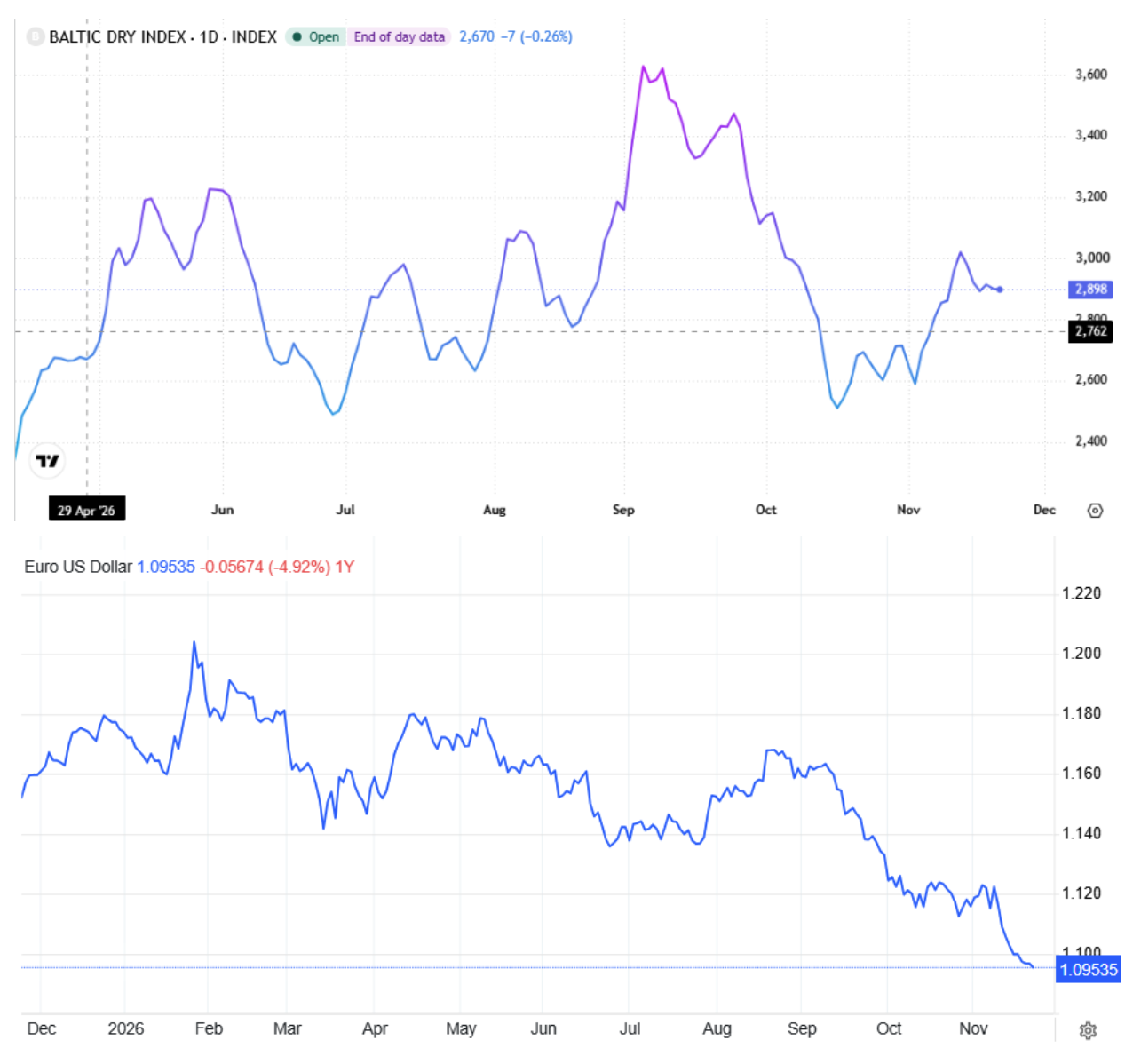
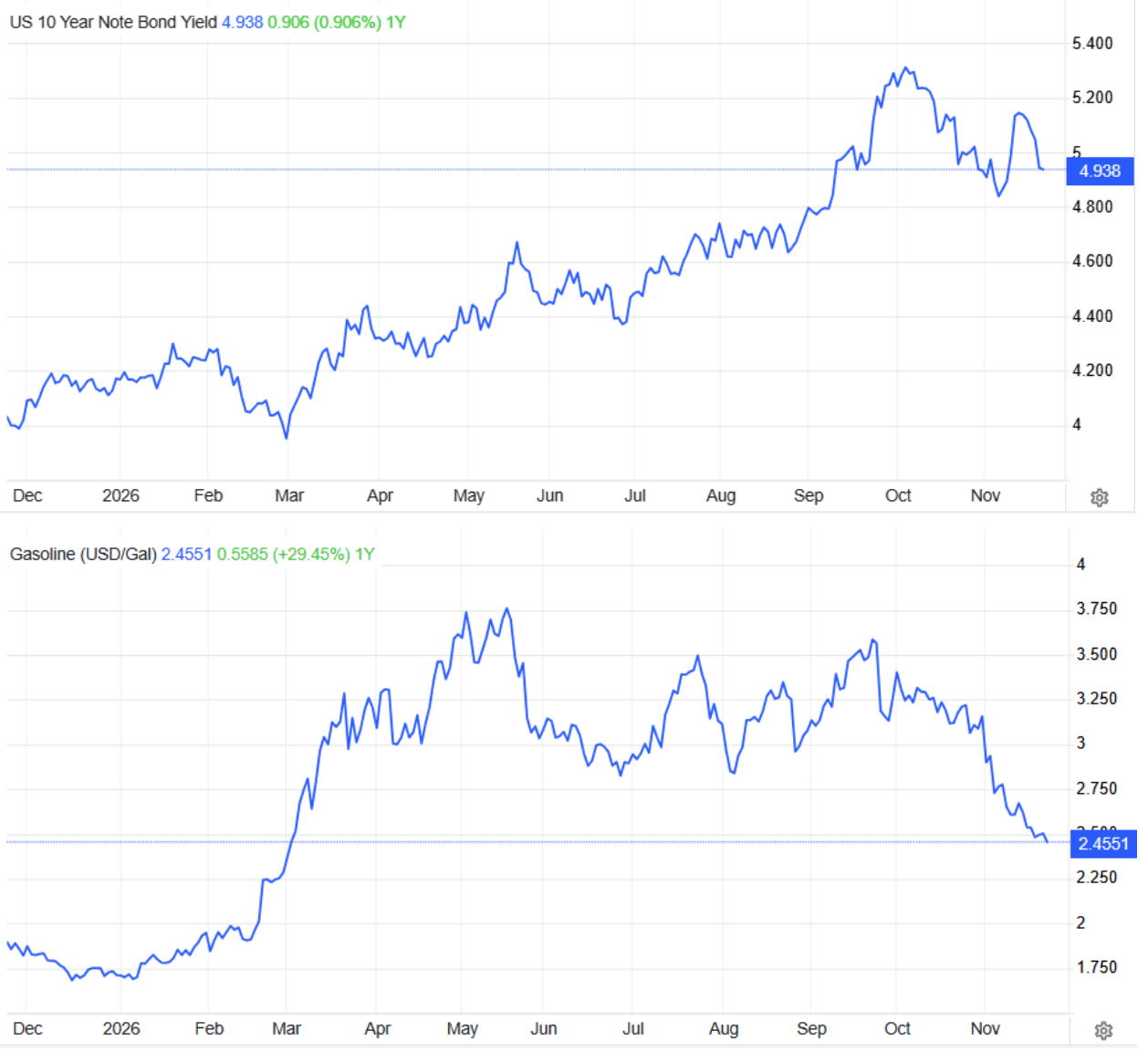
A few months ago, when the yield on the US 10-year Treasury bond had approached 5.30%, the increased cost of borrowing was one of the main reasons for concern and pressure on equity markets. Today, with the yield standing close to 4.96%, approximately 34 basis points lower, the same development does not appear to be receiving a correspondingly positive response. A similar picture can be observed in the energy market. According to the futures contract levels we monitor, since the US midterm elections, gasoline futures have recorded a decline approaching 30%, oil prices have fallen by approximately $15 per barrel, while gasoil has declined by around $300 per metric ton.
These are changes of substantial economic significance, as they can positively affect transportation costs, industrial production, shipping, inflationary pressures and, ultimately, consumers' disposable income. And yet, while previously high energy prices and elevated bond yields were daily arguments supporting negative expectations for the US economy, their significant decline does not appear to be attracting comparable attention. In our assessment, this asymmetry in the evaluation of economic data raises reasonable questions. Why do the same variables become so important when they move in a negative direction, yet are treated almost with indifference when their direction reverses?
The decline in prices does not automatically eliminate economic risks, nor does it guarantee an upward movement in stock markets. Nevertheless, it represents a genuine change in economic conditions, which investors should evaluate using the same criteria they applied when these indicators were moving in the opposite direction. The significant decline in energy prices also creates the conditions for a further easing of inflationary pressures. And here another paradox emerges. At a time when oil, gasoline and gasoil are recording substantial declines from their previous levels, views continue to be expressed regarding the need for further interest rate increases by the Federal Reserve.
In our assessment, such a development should be considered with caution. If the decline in energy costs begins to be reflected in official inflation indicators, maintaining an excessively restrictive monetary policy could place an unjustified burden on economic activity. The United States is seeking to increase GDP, strengthen productive investment and develop new technological infrastructure. But how can this process accelerate if financing costs remain high and the US government continues to face increased debt-servicing expenses on an already enormous national debt? Monetary policy must certainly ensure price stability and assess the full range of inflationary pressures. However, it cannot ignore the impact of high interest rates on investment, economic growth and the refinancing costs of public debt.
If lower energy prices lead to a meaningful decline in inflation, we believe stronger arguments will emerge in favor of a less restrictive monetary policy. The issue becomes even more important when we consider the geopolitical dimension of developments.
As we have repeatedly pointed out in previous articles, the United States, China and Russia are three decisive powers capable of influencing the course of international crises, particularly in Ukraine and Iran. Recent diplomatic contacts in China reinforce, in our assessment, the importance of communication among the major powers. We believe that meaningful understanding between Washington, Beijing and Moscow could form the basis for broader geopolitical settlements, even if there are not yet specific binding agreements to bring the conflicts to an end.
A potential de-escalation could reduce the geopolitical risk premium in energy markets, improve trade flows and create more favorable conditions for the global economy. Conversely, the continuation of conflicts and persistent international uncertainty could limit the benefits arising from lower energy costs and stronger international trade. Against this backdrop, the European Union's position raises concerns. The continuation of sanctions against Russia, alongside ongoing economic and military support for Ukraine, represents a strategic choice which European governments justify on the grounds of protecting European security and Ukrainian sovereignty. However, in our assessment, it remains necessary to examine whether the continuous expansion of economic restrictions can be effectively combined with a new international diplomatic effort.
As we have repeatedly emphasized in previous articles, we believe Europe risks paying an exceptionally high price for its insistence on maintaining a persistently confrontational policy towards Russia. The cost of these choices is not confined to diplomatic relations but is already being passed on to the real economy and, ultimately, to European citizens themselves. The pressures experienced by European industry, particularly because of energy costs and declining competitiveness, serve as a clear warning of the consequences that prolonged geopolitical confrontations can have. Of course, Europe's economic difficulties are not attributable exclusively to sanctions. They are also linked to structural weaknesses, energy dependence, productivity and international competition. This, however, makes it even more important to assess the overall cost of Europe's choices.
Another contradiction we believe deserves attention concerns climate policy and the priorities of the international community. For several years, investment capital amounting to trillions of dollars has been mobilized for the energy transition and the fight against climate change. At the same time, however, geopolitical conflicts continue to cause enormous destruction, burden the global economy and generate new requirements for military spending and reconstruction. We do not question the need to protect the environment. What concerns us is the consistency with which economic, energy and geopolitical priorities are evaluated.
How is it possible that increasingly costly interventions are continuously required to reduce the environmental impact of economic activity, while at the same time the international community struggles to secure the de-escalation of armed conflicts that place a burden on both human life and the environment? It is worth recalling that Donald Trump had already expressed his disagreement with key directions of international climate policy during his first presidential term, choosing instead to place greater emphasis on energy production and the economic competitiveness of the United States. The well-known slogan "Drill, baby, drill" reflects precisely this approach. An increase in oil and natural gas supply, provided it leads to lower prices, can reduce transportation, industrial and shipping costs, while also strengthening the conditions for easing inflationary pressures.
At the same time, the European Union is proceeding with the implementation of the new Euro 7 regulation. From 29 November 2026, the requirements begin to apply to new types of passenger cars and light commercial vehicles, while from 29 November 2027 they will extend to all new vehicles in those categories. The distinctive feature of the new framework is that it is not limited to exhaust emissions but also covers particles generated by brake and tire wear, including those produced by electric vehicles.
This development highlights the fact that even electric mobility, which has been presented as a principal solution for reducing transport emissions, does not eliminate every environmental impact. Batteries often increase vehicle weight, creating additional challenges in terms of tire wear, although regenerative braking can reduce particulate emissions from brakes. This is not merely a theoretical discussion.
The Organization for Economic Co-operation and Development (OECD), in its report "Non-exhaust Particulate Emissions from Road Transport: An Ignored Environmental Policy Challenge", examines particulate emissions that do not originate from exhaust gases, but from brakes, tires, road surfaces and the resuspension of dust. The study points out that heavier electric vehicles can, under certain conditions, produce higher levels of fine particulate emissions from non-exhaust sources compared with equivalent conventional vehicles. It also examines the need to develop policies addressing these emissions.
Similar discussions are taking place at the European research level, with tire wear and vehicle weight becoming increasingly important considerations for future environmental policy. It is therefore possible that additional financial charges based on vehicle weight or particulate emissions may be considered in the future, including for electric vehicles. Such a prospect does not currently constitute an established, EU-wide charge, but it highlights an interesting contradiction: technologies whose adoption was encouraged for years through substantial public incentives may eventually face new environmental requirements and financial burdens.
The essential question for Europe is not whether it should pursue cleaner transportation, but whether continuously increasing regulatory requirements are being combined with an effective strategy for economic growth and stronger competitiveness. In our assessment, the risk facing Europe is now even greater.
At a time when the United States, China and Russia are seeking to redefine their relationships and shape the next geostrategic and geoeconomic environment, the European Union risks remaining trapped in choices that fail to respond quickly enough to the new realities. We would even go so far as to say that, if Europe continues in the same direction, it may find itself not merely behind international developments but significantly delayed in adapting to a new global economic and geopolitical order. Such a development would carry not only political costs, but potentially far more serious consequences for investment, industrial production, employment and the living standards of European citizens. Of particular significance is the fact that important elections will take place in European countries in 2027, including France, which could substantially influence Europe's political direction.
Public dissatisfaction with the cost of living, economic stagnation and the choices made by national governments could become a decisive factor in these elections. We hope that European leaders will recognize in time the scale of the challenges and the long-term consequences of their decisions. For in a period when global economic and geopolitical balances are changing at unprecedented speed, time does not necessarily work in favor of those who are slow to adapt.
Despite the intense negativity that continues to characterize financial markets following the US midterm elections, we continue to maintain our positive outlook for their performance over the coming period. Our position is not based exclusively on historical statistics or the traditionally favorable seasonality of the period from Thanksgiving through the end of the year. On the contrary, we believe that significant economic and geopolitical developments are taking shape which could act as catalysts for a reversal of negative investment sentiment.
The decline in energy prices, the prospects for easing inflationary pressures, potential changes in expectations regarding Federal Reserve monetary policy, continuing technological development and, above all, the important international meetings and negotiations currently under way or expected to take place are factors which, in our view, have not yet been fully reflected in recent market behavior. As we have repeatedly pointed out in previous articles, major economic and geopolitical changes always create significant risks, but also equally significant investment opportunities. In our assessment, the current environment is no exception.
We do not disregard the risks, nor do we consider a positive market performance to be guaranteed. Nevertheless, we continue to believe that the developments ahead could create the conditions for a meaningful upward movement, potentially stronger than that currently anticipated by prevailing investment sentiment. The real challenge for investors is not to follow every political confrontation or short-term wave of negativity, but to identify in time the catalysts that can change the direction of markets. For, as we have emphasized many times, the greatest investment opportunities do not necessarily emerge when optimism prevails, but often when uncertainty and negativity overshadow the economy's true prospects.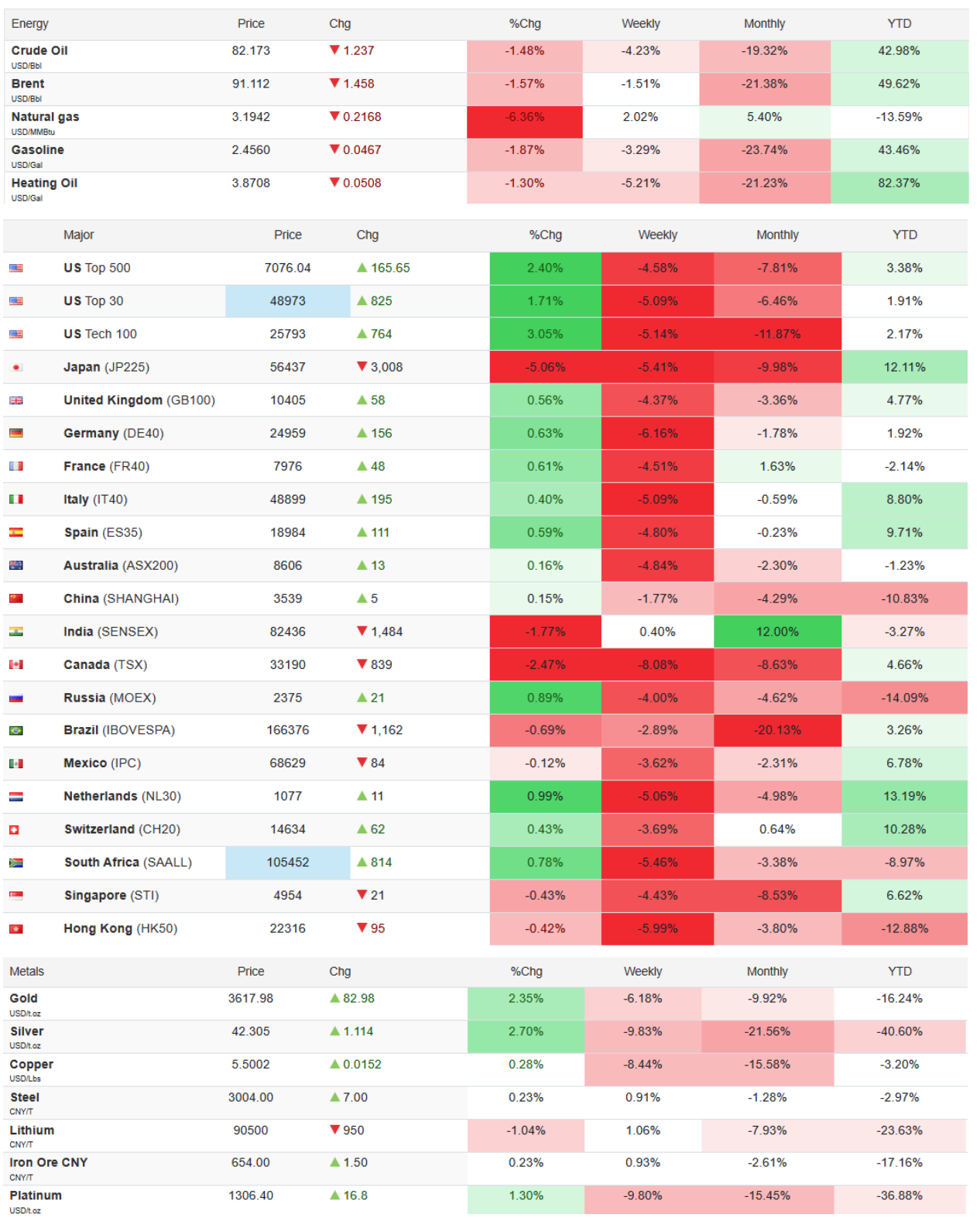
By George D. Kotsiakis
Founder - Private Wealth & Investment Strategist
GEKODESK & PARTNERS - Global Investment Services