




“MAGA & The Next Bull Run”
The Strategy Behind the Developments and the Major Investment Opportunities Taking Shape
From US economic policy and geopolitical balances to the dollar, shipping and transportation, the coming months could prove decisive for the direction of financial markets and the global economy.
We are now entering the final stretch ahead of the November 3 midterm elections in the United States, at a time of particularly significant economic and geopolitical developments. The final quarter of 2026 brings together a series of catalysts that could influence not only the direction of stock markets through the end of the year, but also the economic outlook for 2027.
In previous articles, we have repeatedly discussed the strategy that we believe the US administration is pursuing. It is a strategy in which the economy, energy, domestic production, international trade and geopolitics do not operate independently but represent different aspects of a broader approach. We continue to believe that this strategy still has considerable potential to surprise us and that a significant part of its results has yet to be fully reflected either in the real economy or in the valuations of American companies.
The coming weeks are of particular interest, as the electoral contest, developments in the Middle East, US relations with Russia and China, energy policy and the monetary policy direction of the Fed are shaping a complex environment. Within this environment, however, we believe that important conditions are emerging for the development of renewed positive economic and stock market momentum.
The Midterms and Their Significance for What Comes Next
Midterm elections take place halfway through the four-year presidential term and largely determine the political balance in Washington for the following two years. American voters are called upon to elect all 435 members of the House of Representatives and fill 35 Senate seats, while important state elections are also taking place.
The outcome will affect the Trump administration’s ability to advance its legislative priorities and shape the economic conditions for the remainder of its term. From an investment perspective, however, we do not believe that there is only one potentially positive electoral scenario. If the Republicans retain their political majority, this could strengthen expectations of continuity in the existing economic agenda. On the other hand, a different composition of Congress could create conditions that limit major legislative changes, something that, under certain circumstances, may also be viewed positively by the markets.
This does not mean that every possible outcome will automatically lead to a market rally. It means that the stock market’s reaction will depend on how investors interpret the new political balance, the economic priorities and the ability to implement them. The most important factor is that, following the elections, a major source of political uncertainty will have been removed, allowing markets to focus more closely on economic developments and corporate prospects.
Wall Street and Main Street: The Economy of the Markets and the Economy of Households
One of the most important issues in the current environment is the divergence between the picture presented by Wall Street and the economic reality experienced by a significant part of American society. Stock markets primarily assess the prospects for corporate earnings, technological development, liquidity and investment expectations. By contrast, for the average American citizen, the most important consideration is the purchasing power of their income and the everyday cost of living.
The increases in food, energy, housing and service prices over recent years continue to influence household economic behavior, even when the annual inflation rate declines. This is a particularly important factor in the Midterms. Economic policy is not judged by voters solely through the performance of stock market indices. It is judged through everyday life, disposable income, employment and the prospect of an improvement in living standards.
For this reason, we believe that measures affecting energy costs and fuel prices are taking on economic and political significance.
Energy Cooperation with Russia and Its Potential Geopolitical Dimension
The recent development concerning the possibility of increasing the supply of Russian diesel to international markets is, in our assessment, of particular interest. From an economic perspective, an increase in fuel supply could help ease price pressures, if market volumes and conditions allow the benefits to be passed on to end consumers.
Diesel is a major cost component in freight transportation, industry, agriculture and the broader supply chain. Consequently, a sustained decline in its price could affect not only inflation but also the operating costs of important productive sectors. However, we believe there is a second dimension, potentially even more significant.
Russia maintains strategic relations with Iran, while China is a particularly important economic and diplomatic partner of Tehran. The two countries have different interests and varying degrees of influence, but both can play a role in the broader regional balance. Energy cooperation between Washington and Moscow therefore raises an interesting question: could it become a starting point or a facilitating factor for broader diplomatic initiatives involving Iran as well?
We are not suggesting that a diesel agreement automatically implies an agreement concerning the Middle East. We do, however, believe that economic and geopolitical moves should not always be assessed in isolation. If meaningful signs of stabilization emerge in the Middle East, the implications could be significant for energy, international trade, transportation and investor sentiment.
This is precisely where we identify one of the most important potential catalysts for the period ahead.
Russia, China and the Broader Geopolitical Equation
The crisis in the Middle East and the war in Ukraine represent two distinct geopolitical fronts, although they have significant interactions. Russia is at the center of the war in Ukraine, while also maintaining strategic relationships and interests in the Middle East. China, for its part, is a major force in global trade, a significant buyer of energy products and an economic power with substantial influence on international balances.
The development of US relations with these two countries could significantly affect the outlook for the global economy. We attach particular importance to trade relations between Washington and Beijing. China is one of the most important drivers of demand for raw materials, industrial production and international commodity flows. A period of greater predictability in relations between the world’s two largest economies could reduce some of the uncertainty affecting investment and supply chains.
Our fundamental approach is that a definitive resolution of every geopolitical problem is not necessary for economic momentum to begin changing. Even meaningful signs of stabilization can strengthen confidence and create conditions for a recovery in activity.
The Fed and Financial Conditions
In the economic environment now taking shape, monetary policy remains an important factor. The Fed meeting on October 27-28, just a few days before the Midterms, is understandably attracting investors’ attention. For our investment analysis, however, the critical issue is not to predict a specific interest rate decision, but to assess the financial conditions that will emerge for businesses and the real economy.
Inflation trends, government bond yields, the labor market and growth prospects will continue to influence the Fed’s decisions and the valuation of financial assets. If economic conditions allow for a gradual improvement in financing costs without a renewed acceleration in inflation, additional conditions could emerge to support investment, consumption and corporate profitability.
The United States and Europe: Two Different Growth Paths
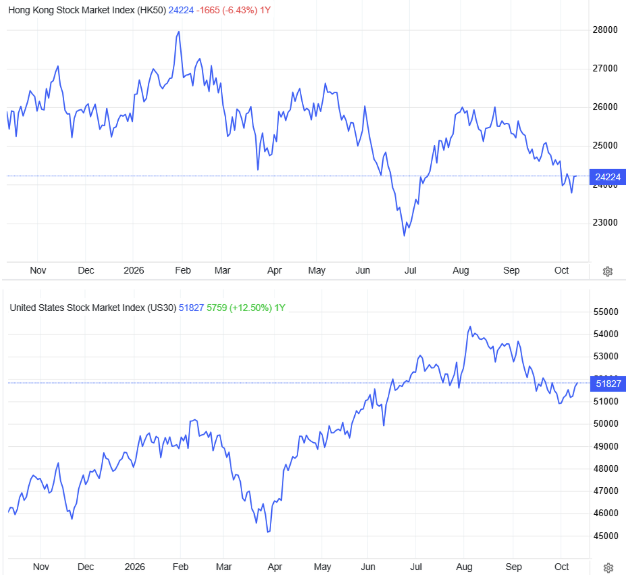
In previous analyses, we have pointed out that the United States and Europe appear to be following different economic paths. In our assessment, the US administration is seeking to connect energy policy, industrial development, trade negotiations and capital attraction with the overall strengthening of the economic power of the United States.
The effectiveness of these choices will be judged by actual economic results. Nevertheless, we believe that this strategy is creating the conditions for significant growth developments over the coming quarters. In Europe, by contrast, we continue to identify significant structural weaknesses. High energy costs, pressures on industrial competitiveness, limited growth momentum and difficulties in coordinating economic policies are challenges that cannot be addressed through short-term measures alone.
We have repeatedly stated that, unless Europe proceeds with substantial changes, these economic pressures may initially lead to sharper political divisions and subsequently to deeper structural problems. The importance of 2027 is further reinforced by the elections expected in major European countries, which could influence economic priorities and the ability to implement reforms. We do not overlook European initiatives aimed at improving competitiveness. The question, however, is whether they will be implemented quickly enough and with sufficient effectiveness. Personally, I do not believe they will.
This divergence remains an important element of our medium-term investment approach, with particular emphasis on the opportunities we identify in the American economy.
The US Dollar and the Catalysts for the Period Ahead
Another factor we have addressed in previous articles is the prospect of a stronger US dollar. The direction of the American currency does not depend exclusively on interest rate differentials between the United States and other economies. It is also influenced by growth expectations, international capital flows, confidence in the American economy and geopolitical developments.
We believe that the strategy of attracting investment and the relative growth momentum of the United States could provide significant support for the dollar over the medium term. In this context, we also attach particular importance to a historic change in the operation of US capital markets, which we have already highlighted in a previous update. Beginning December 6, 2026, Nasdaq is scheduled to transition to 23-hour trading, five days a week, dramatically expanding access to the US stock market for investors around the world.
In our assessment, this is a development of strategic importance, extending well beyond a simple expansion of trading hours. The ability to participate in US markets on an almost around-the-clock basis, regardless of investors’ geographical location or time zone, could further enhance Wall Street’s international appeal, facilitate the movement of investment capital and create conditions for increased trading activity.
In such an environment, greater global access to US equities could also support demand for the dollar, provided it is accompanied by additional net inflows of international capital. We believe that this change represents another element in the broader evolution of the United States as the dominant international investment destination, with implications that may become more visible over the coming years.
Our outlook remains positive, with the expectation that the coming months may offer new opportunities, provided our fundamental economic and geopolitical assumptions are confirmed. Naturally, a stronger dollar does not always benefit every American company, particularly those generating substantial revenues abroad. For this reason, its assessment must be linked to the drivers of its appreciation and the overall direction of the economy.
Shipping: The Next Phase of a Significant Economic Cycle
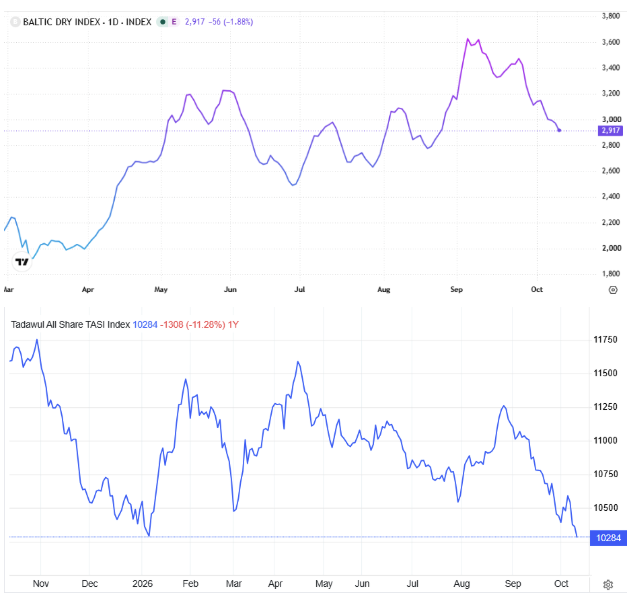
Shipping continues to hold a special place in our investment analysis. At the 17th Shipping Congress in 2025, when the Baltic Dry Index was below 1,000 points, we referred to the prospect of a new “golden era” for shipping. Our assessment did not concern merely a temporary improvement in freight rates, but the possibility of a broader cycle of opportunities emerging through changes in trade flows, energy requirements and international economic balances.
In the articles that followed, we maintained this positive approach, estimating that the Baltic Dry Index could move significantly above 3,000 points, provided the appropriate supply and demand conditions developed. Today, the strong conditions observed in certain tanker markets are of particular interest.
However, we believe that the next major opportunity could emerge in the dry bulk market, provided the global economy enters a period of stronger production and trade. Increased demand for iron ore, agricultural products and other raw materials, combined with vessel supply conditions and changes in transportation distances, could create the conditions for a significant strengthening of the freight market.
This is an outlook we are following with particular interest, maintaining our positive assessment of the sector while also recognizing that the dry bulk market is driven by different freight rate determinants from those affecting the tanker market.
Transportation: The Real Economy and the Next Positive Momentum
We attach particular importance to the broader transportation sector, as we believe it represents one of the most significant indicators of real economic activity. Transportation connects production with consumption, raw materials with industry, and businesses with international markets.
For this reason, its performance can provide meaningful indications of economic momentum beyond the short-term movements of stock market indices. In our assessment, significant investment opportunities remain within the sector, as the valuations of several companies do not fully reflect the prospects that could emerge in an environment of stronger economic activity. This is where one of the most important elements of our investment approach lies.
We do not consider the definitive resolution of every geopolitical conflict necessary for economic momentum to begin changing. Even meaningful signs of stabilization can reduce uncertainty, strengthen business expectations and create conditions for increased production, investment and international trade. This development could subsequently translate into greater demand for transportation services, higher freight volumes and improved operating results for selected companies.
This is precisely what we consider to be one of the most important mechanisms behind the creation of the positive economic and stock market momentum we expect in the period ahead.
Transportation, therefore, is not merely an investment opportunity. It is also an important indicator confirming that improving economic expectations are beginning to translate into the real economy.
From the Midterms to Thanksgiving and the End of 2026
The timing presents particular investment interest. The midterm elections take place on November 3, shortly before Thanksgiving and the final stretch of the stock market year. Historically, the period following the Midterms has often been associated with positive stock market performance, although seasonality offers no guarantee of future returns.
We believe that the removal of electoral uncertainty, combined with potentially positive developments on the geopolitical fronts, in energy and in financial conditions, could create a particularly interesting environment for the final two months of 2026. Our fundamental outlook for US stock markets remains positive.
We do not overlook the risks that remain. A new geopolitical escalation, a resurgence of inflation or a significant deterioration in corporate earnings could alter expectations. Nevertheless, we believe that the convergence of several potentially positive catalysts is creating conditions for significant investment moves that may not necessarily be limited to the final quarter of the year.
The Strategy That Could Be Reflected in US GDP and Corporate Valuations
Our investment approach is not based exclusively on the expectation of a positive close to 2026. On the contrary, we believe that the most important developments may still lie ahead. We have repeatedly argued that the economic and geopolitical strategy of the US administration has a broader time horizon and that many of its effects require time before they are reflected in the real economy.
The strengthening of domestic production, the attraction of investment, energy policy, trade agreements and the emergence of new international balances are developments that could significantly influence the growth momentum of the United States. We believe that this strategy still has considerable room to deliver positive surprises. Its real confirmation, however, will not come solely from Wall Street’s performance.
It will need to be reflected in increased business investment, improved productivity, stronger corporate profitability and, ultimately, growth in real US GDP. If economic and geopolitical developments move in the direction we anticipate, we believe that the coming months could create conditions for more positive revisions to economic expectations and significant investment opportunities. In this environment, the valuations of several companies could benefit, not only through improved investor sentiment, but primarily through stronger underlying economic performance.
Our assessment remains that the American strategy still has much to reveal and that its most significant results may become more visible during 2027. The Midterms represent an important milestone, but not the end of this journey. The final quarter of 2026 could mark the beginning of a new period of significant economic and investment developments, with their true momentum gradually becoming reflected in growth, businesses and international markets.
The Value of Strategy and the Bigger Picture of the Markets
We believe that the developments taking shape could create significant investment opportunities and the prospect of particularly attractive returns for investors who approach the markets with patience, discipline and a clear strategy. After all, we have repeatedly emphasized that meaningful investment success does not result from emotional reactions to daily market fluctuations, but from the right selection and timing of investments, measured risk-taking and, above all, consistency in implementing a comprehensive portfolio management strategy. Because ultimately, what determines long-term investment success is not only the opportunities presented by the markets, but the ability to recognize, evaluate and capitalize on them in the right way.
In our weekly articles leading up to the US elections, we will continue to monitor and analyze the most important economic, political and geopolitical developments, seeking to offer you, as we have consistently done over the years, an independent, well-substantiated and meaningful perspective on the bigger picture of the markets. Our objective is not to follow the news of the day or the short-term psychology of the markets, but to identify broader trends early, assess the real catalysts and highlight the investment opportunities taking shape behind everyday events.
GEKODESK & PARTNERS – Global Investment Advisors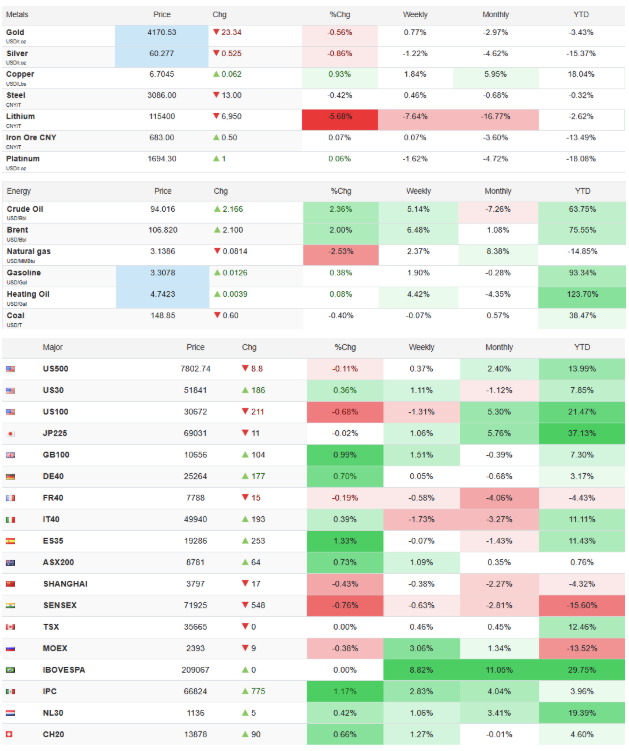
By George Kotsiakis