



Global shipping has entered an era in which competitive advantage is increasingly determined not only by fleet capacity, operational efficiency or access to capital, but also by the ability to transform data into informed decisions. While the maritime industry has historically been cautious in adopting disruptive technologies, Artificial Intelligence (AI) is rapidly moving beyond experimentation and becoming an operational necessity. The conversation is no longer about whether AI will influence shipping, but about how quickly companies can integrate it into their business models without compromising safety, cybersecurity or human expertise.
Shipping has always been a data-intensive industry. Every voyage generates enormous volumes of information concerning weather patterns, vessel performance, fuel consumption, engine conditions, cargo operations, emissions, port calls and navigational decisions. Traditionally, these datasets were stored independently and analysed retrospectively, limiting their operational value. Today, advances in cloud computing, satellite communications and machine learning enable shipping companies to process this information in real time, transforming raw data into actionable intelligence that supports commercial, technical and operational decision-making.
The International Maritime Organization (IMO) has accelerated the digital transformation of shipping through increasingly demanding environmental regulations and its revised greenhouse gas reduction strategy.
Compliance with Carbon Intensity Indicator (CII) requirements, Energy Efficiency Existing Ship Index (EEXI) obligations and the broader decarbonisation agenda requires continuous monitoring of vessel performance rather than periodic reporting. AI-powered analytical platforms enable operators to monitor operational efficiency continuously, identify deviations and recommend corrective actions before regulatory performance deteriorates.
Environmental compliance is therefore becoming a data management challenge as much as an engineering one. Modern vessels are equipped with hundreds of sensors generating millions of operational data points during every voyage. Human operators alone cannot realistically analyse this information within the timeframe required for effective decision-making. Artificial Intelligence offers the capability to interpret complex operational relationships that would otherwise remain unnoticed, providing recommendations that improve fuel efficiency while maintaining safety and commercial reliability.
Fuel optimisation remains one of AI’s most commercially significant applications. Fuel costs continue to represent one of the largest operating expenses for shipowners, while increasing environmental expectations place additional pressure on reducing emissions. AI-driven voyage optimisation systems integrate weather forecasts, ocean currents, vessel loading conditions, traffic density, historical performance and chartering constraints to recommend optimal routes and speed profiles. Unlike conventional weather routing, these systems continuously adapt recommendations as operational conditions evolve, allowing vessels to respond dynamically to changing circumstances.
Even relatively small improvements in fuel efficiency can generate substantial financial benefits across an entire fleet. A reduction of only a few percentage points in fuel consumption may translate into millions of dollars in annual savings for large operators while simultaneously lowering greenhouse gas emissions. As environmental performance increasingly influences chartering decisions and access to finance, operational efficiency has become closely linked with long-term commercial competitiveness.
Predictive maintenance represents another transformative application of AI. Historically, ship maintenance has followed either scheduled maintenance intervals or corrective repairs after equipment failure. Both approaches involve inefficiencies. Scheduled maintenance may replace components that remain fully operational, whereas reactive maintenance frequently results in costly downtime and operational disruption. AI changes this model by continuously analysing vibration patterns, temperatures, lubrication conditions, pressure variations and electrical performance to identify early indicators of equipment deterioration.
Instead of reacting to failures, technical managers can schedule maintenance according to actual equipment condition. This condition-based maintenance philosophy improves vessel availability, reduces repair costs and minimises unexpected operational interruptions. Classification societies, including DNV, Lloyd’s Register and ABS, have increasingly recognised predictive maintenance technologies as important contributors to safer and more efficient fleet management.
Artificial Intelligence is also reshaping navigational safety. Decision-support systems capable of integrating radar information, Automatic Identification System (AIS) data, electronic charts, weather conditions and traffic separation schemes provide bridge teams with enhanced situational awareness. Although these systems do not replace navigational responsibility, they strengthen human decision-making by identifying collision risks, suggesting avoidance manoeuvres and monitoring deviations from planned routes.
The future development of autonomous shipping further illustrates AI’s growing importance. While fully autonomous ocean-going vessels remain limited to specific operational environments, autonomous navigation technologies are progressing steadily through pilot projects involving coastal shipping, short-sea transport and remotely operated vessels. These developments should not be interpreted as eliminating the role of seafarers. Instead, they demonstrate how AI increasingly functions as a decision-support tool that enhances safety rather than replacing professional judgement.
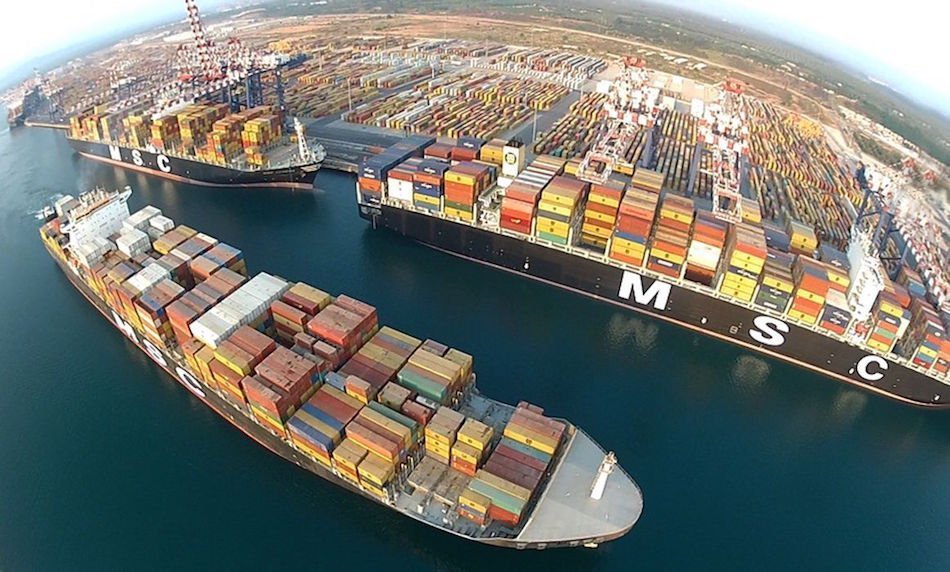
Port operations represent another area undergoing significant digital transformation. Congestion, inefficient berth allocation and cargo handling delays continue to reduce global supply chain efficiency. Artificial Intelligence allows ports to forecast vessel arrivals more accurately, optimise berth planning, allocate equipment dynamically and coordinate cargo movements more effectively. The emergence of smart ports demonstrates that competitiveness increasingly depends upon the integration of digital infrastructure across the entire maritime logistics chain rather than within individual shipping companies alone.
Nevertheless, the rapid adoption of AI introduces significant challenges that require careful governance. Data quality remains one of the most critical limitations. Machine learning algorithms are fundamentally dependent upon reliable and consistent information. Incomplete datasets, inaccurate sensor measurements or inconsistent reporting practices may produce misleading recommendations with potentially serious operational consequences. Consequently, investment in digital infrastructure and standardised data governance should accompany every AI implementation strategy.
Cybersecurity has become equally important. The increasing connectivity of vessels through satellite communication systems, cloud-based fleet management platforms and remote monitoring technologies inevitably expands the industry’s cyber risk exposure.
Recent cyber incidents affecting global logistics providers have demonstrated that digital resilience is no longer exclusively an information technology concern but a core operational requirement. AI can strengthen cybersecurity through anomaly detection and automated threat identification, yet it simultaneously creates additional digital dependencies that require continuous oversight and investment.
The human element remains central throughout this technological transition. Maritime operations continue to depend upon leadership, experience, professional judgement and effective communication under highly dynamic conditions. Artificial Intelligence cannot replicate these human capabilities. Instead, it should be understood as augmenting rather than replacing professional expertise. Future masters, chief engineers and shore-based managers will increasingly rely upon AI-generated recommendations while retaining ultimate responsibility for operational decisions.
This transformation carries important implications for maritime education. Universities, maritime academies and professional training institutions must adapt their curricula to reflect the digital evolution of the industry. Future maritime professionals will require competencies extending beyond navigation and marine engineering to include data analytics, artificial intelligence, cybersecurity and digital systems management. Continuous professional development will become essential as technological innovation accelerates.
Financial markets are also recognising digital maturity as an indicator of corporate resilience. Investors, banks and insurers increasingly evaluate operational transparency, environmental performance and digital capabilities alongside conventional financial metrics. Shipping companies capable of demonstrating measurable improvements in efficiency, emissions management and risk mitigation through AI-supported operations may strengthen their access to capital while improving their long-term commercial attractiveness.
Importantly, AI is no longer the exclusive domain of the largest multinational shipping companies. Cloud-based platforms, subscription software models and scalable digital services have significantly reduced implementation costs, enabling medium-sized operators to access technologies that were previously available only to major industry players. This democratisation of artificial intelligence has the potential to reshape competition by allowing innovation to compete alongside fleet size.
However, technology alone cannot guarantee success. Freight market volatility, geopolitical instability, fluctuating energy prices and regulatory uncertainty will continue to influence commercial outcomes. Artificial Intelligence should therefore be viewed as a strategic capability that strengthens decision-making rather than as a substitute for sound management. The most successful shipping companies will likely be those capable of combining technological innovation with operational experience, prudent investment and organisational adaptability.
The maritime industry has repeatedly demonstrated its capacity to evolve in response to changing economic, technological and regulatory environments.
Artificial Intelligence represents the next stage of that evolution. Its greatest contribution lies not in replacing human expertise but in expanding it through faster, more accurate and data-driven decision-making.
In the coming decade, competitive advantage will increasingly belong to shipping companies that successfully integrate artificial intelligence into everyday operations while maintaining high standards of safety, cybersecurity, environmental responsibility and professional competence. Digital transformation is no longer a vision of the future; it is becoming a defining characteristic of maritime competitiveness. Those who recognise AI as a strategic investment rather than merely another technological tool will be better positioned to navigate the increasingly complex realities of global shipping.
By Dr. Alexandros Kelmalis
CEO World Star Shipping / World Star Yachting